
Aircon Blinking Light: Singapore Troubleshooting Guide
What blinking lights mean, how to read the pattern, safe reset steps, and when to bring in a technician — across major aircon brands.
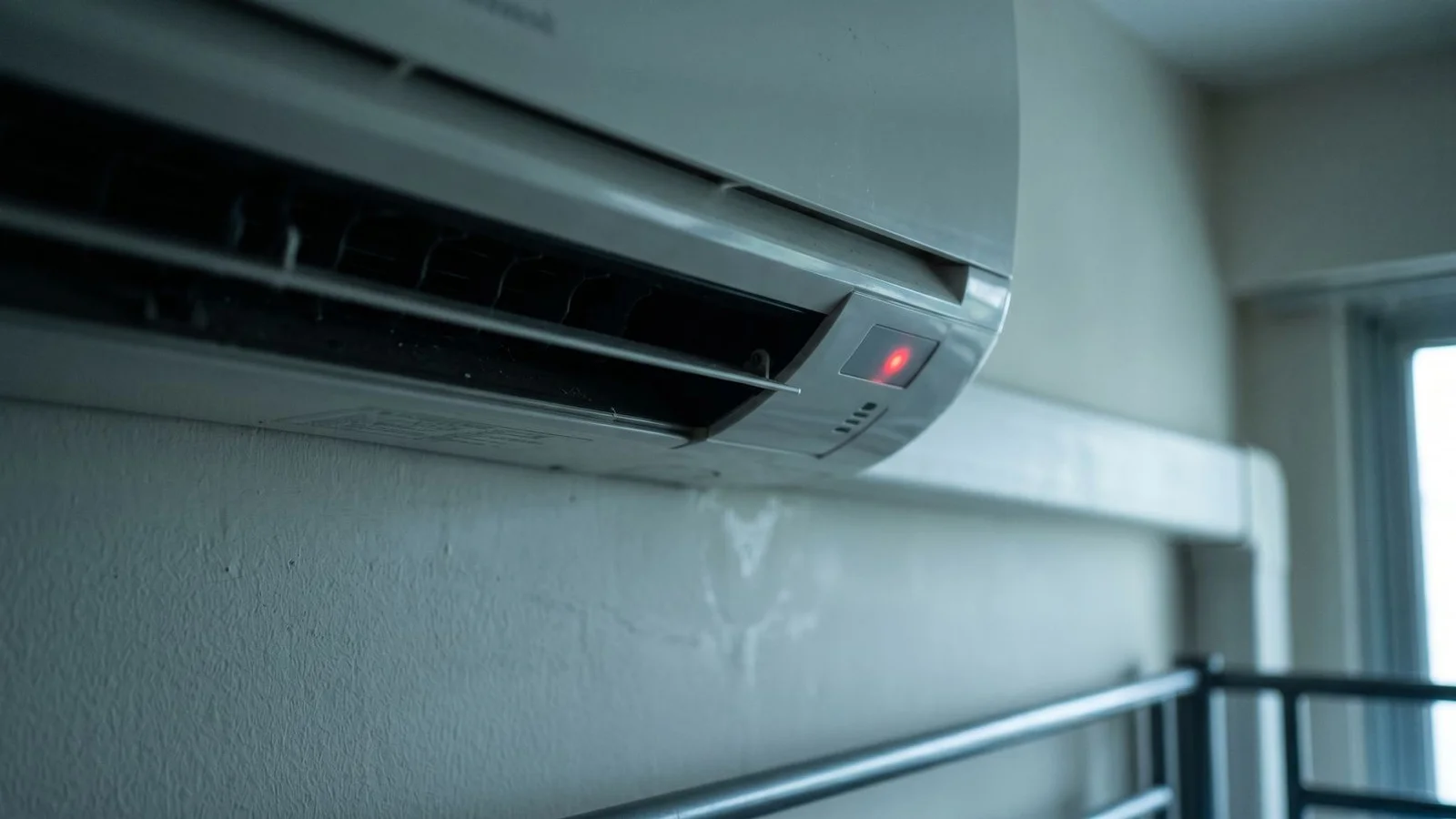
You know how a blinking check-engine light immediately changes the mood of a drive. When dealing with an aircon blinking light, Singapore homeowners experience that exact same feeling of panic.
We founded iCare Aircon back in 2016 with James Tan and Sandra Lim to decode these specific panic moments.
An aircon flashing light is simply your cooling system actively protecting itself from a major electrical blowout. Our technicians treat this as a built-in distress signal.
Let’s translate those flashes into plain English so you can make an informed decision. This troubleshooting roadmap is an essential piece of our broader Aircon Repair coverage.
What blinking lights generally mean (error code triggered)
A blinking aircon error light on your indoor unit means the system has detected an internal fault and automatically shut down the compressor to prevent further damage. This flashing indicator is a direct alert that an alphanumeric error code has been logged in the control board’s memory.
We often see homeowners ignore these warnings until the unit starts blowing warm air. Condensation buildup inside the casing is a massive issue in Singapore. High humidity levels frequently cause water damage to the Printed Circuit Board, commonly known as the PCB.
Replacing a fried condenser unit PCB can cost between $480 and $600 in 2026. The blinking light prevents the system from running a short-circuited board and starting an electrical fire.
Our daily service logs show that thermistor faults are another primary trigger. Thermistors are small temperature sensors that dictate when the compressor should activate. A corroded sensor fails to read the room temperature accurately.
Replacing this specific part costs roughly $70 to $200, which is much cheaper than replacing a blown compressor.
Three Common Triggers for the Warning Light
- Sensor Malfunctions (Thermistors): Defective indoor or outdoor temperature sensors fail to send resistance signals to the control module.
- Refrigerant Leaks: The system detects low pressure in the copper pipes and shuts down to protect the compressor from dry running.
- PCB Water Damage: Heavy condensation drips onto the main electronic control board, disrupting the communication between indoor and outdoor units.
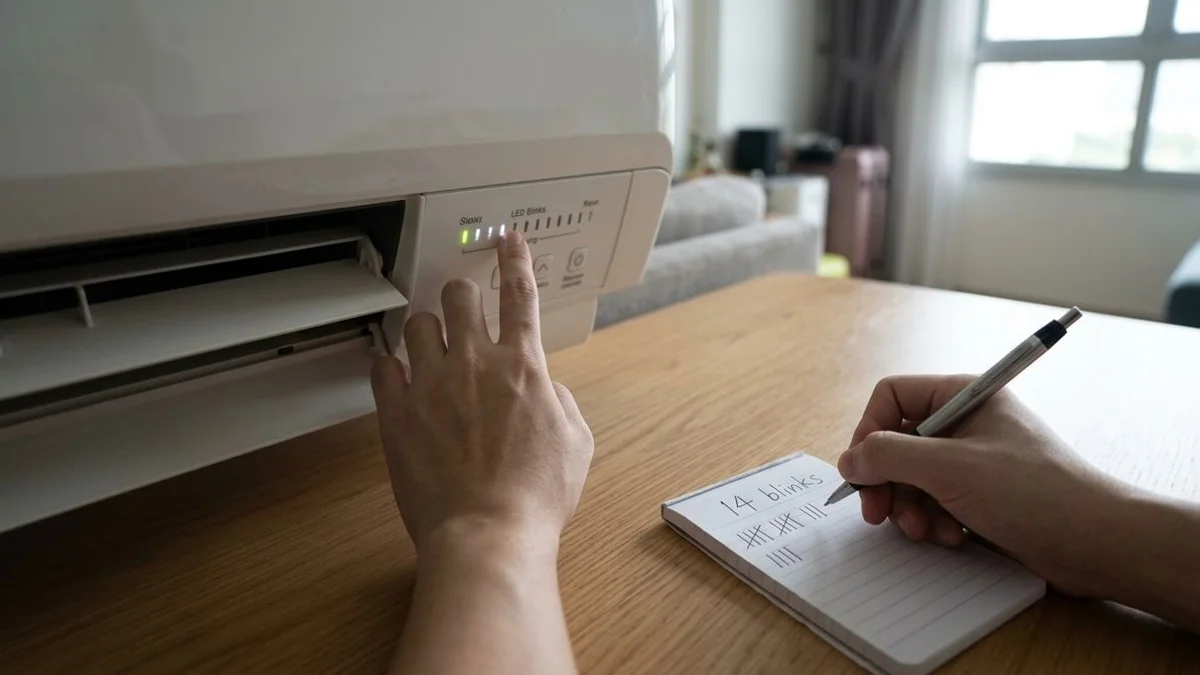
How to read the pattern (count of blinks per cycle)
You can extract the exact fault by counting the specific number of flashes and pauses displayed on the unit’s LED panel. This rhythmic sequence translates directly into the manufacturer’s diagnostic error code.
We teach our clients to grab a notepad and watch the indicator panel closely before doing anything else. The sequence of long and short flashes acts like Morse code for your cooling system.
Panasonic units often use color-coded diagnostics to signal different severities. A blinking yellow or amber light usually points to a clogged air filter or restricted airflow. This is an easy maintenance issue you can often fix yourself.
A blinking red LED typically indicates a critical compressor malfunction or thermal overload.
Our technicians always check which specific light is flashing on a Mitsubishi Starmex unit. A Timer light blinking seven times indicates a malfunction in the outdoor PCB or fan motor. The Operation light blinking signals a power supply issue or a faulty indoor control board.
Decoding the Rhythmic Flashes
| Indicator Type | Common Observation | What It Usually Means |
|---|---|---|
| Timer Light (Mitsubishi) | Continuous blinking pattern | Timer-related malfunction or incorrect timer settings. |
| Operation/Power Light | Blinking green or red | Power supply disruption or indoor control board failure. |
| Amber/Yellow Light (Panasonic) | Steady pulsing | Airflow restriction, typically requiring a simple filter wash. |
Safe reset procedure (power cycle)
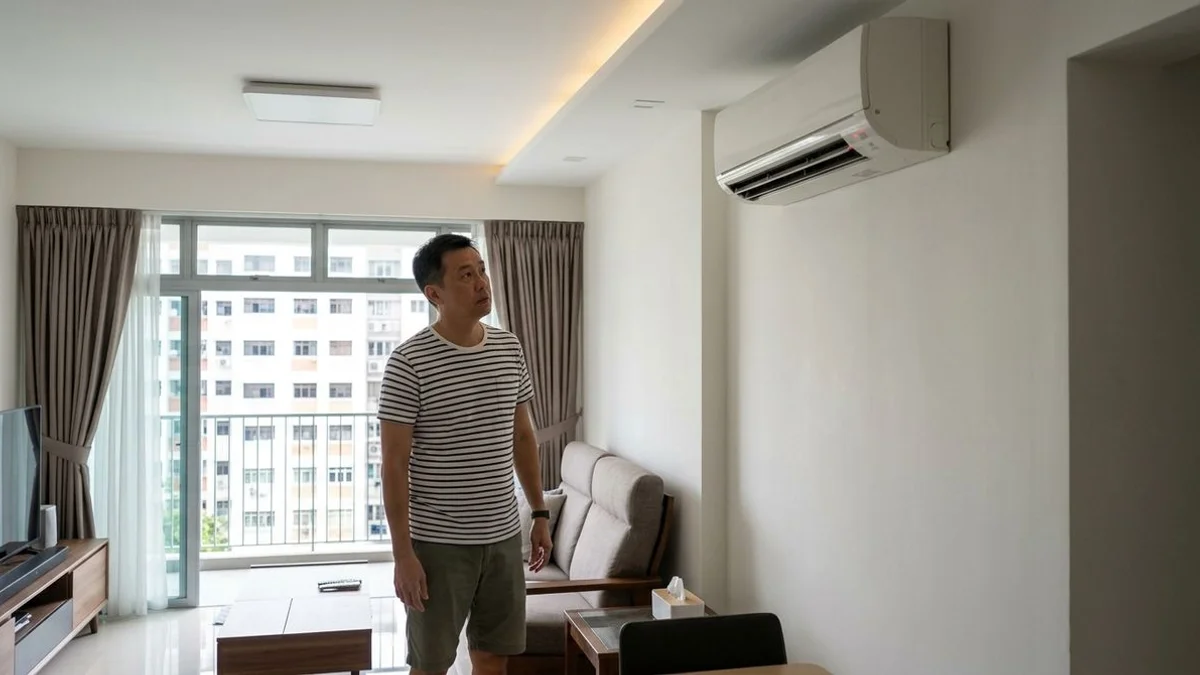
A safe power cycle requires powering down the unit with your remote control and then turning off the dedicated wall isolator switch or circuit breaker. You must leave the power completely disconnected for a full 15 to 30 minutes.
We receive countless calls from residents who try to reset their system by simply pressing the remote button twice. This quick click does not clear the error codes stored in the main circuit board.
Electrical capacitors inside the unit retain a charge even after the power is shut off. Waiting 30 minutes gives these components significant time to discharge completely. This hard reset clears temporary communication errors caused by power grid fluctuations.
Our best insider tip is to check the condenser unit outside while waiting for the reset. You should look for ice buildup on the copper pipes or listen for unusual humming.
Steps for a Complete Hard Reset
- Turn off the unit: Use the remote control to shut down the indoor blower.
- Locate the isolator switch: Find the dedicated aircon switch on the wall or the main circuit breaker panel.
- Cut the power: Switch the breaker to the off position.
- Wait 30 minutes: Allow all internal capacitors to drain their residual voltage.
- Restore power: Turn the breaker back on and test the unit.
For a related deep-dive, see our guide on Aircon Error Codes Guide: Daikin, Mitsubishi, Panasonic.
Why brand matters (different code tables)
Every air conditioning manufacturer programs their system with a completely proprietary set of diagnostic codes. A green flashing light on a Daikin system requires a totally different troubleshooting approach than a green light on a Mitsubishi unit.
We always ask callers for their specific brand and model number before dispatching a van. The digital language used to report system failures varies wildly across the industry.
A U4 error code on a Daikin unit points specifically to a communication fault between the indoor and outdoor units. This often happens when rainwater damages the outdoor PCB. Conversely, an E5 error on many generic brands indicates a similar communication failure but requires checking different wiring harnesses.
Our team relies on brand-specific manuals because generalized advice often leads to wasted money. You can cause more damage by applying a Panasonic fix to a Daikin problem.
Comparing Top Brands in Singapore
| Aircon Brand | Diagnostic Method | Common Fault Indicator |
|---|---|---|
| Daikin | Remote control button sequence | U4 (Indoor/Outdoor communication error) |
| Panasonic | Color-coded LEDs (Red, Amber, Blue) | H11 (Communication error) |
| Mitsubishi | Counting the number of flashes | Timer light flashes 7 times (Outdoor PCB) |
Bridge to error codes guide
Identifying the specific error code is the crucial last step before booking a professional repair service. A clear diagnosis speeds up the entire fix.
We have compiled a breakdown of the most frequent alphanumeric codes you will encounter in Singapore this year. Finding your exact error code helps secure an accurate quote over the phone. Transparent pricing relies on knowing exactly which component has failed.
Common Alphanumeric Faults for 2026
Many modern units now display actual numbers on the indoor digital panel instead of just blinking. E1 and E2 codes usually signal that the temperature sensors are failing to read the room correctly.
Our service database shows that F0 is one of the most dreaded codes to see. The F0 warning indicates a serious refrigerant leak or critically low gas levels. Running the system with an F0 error will inevitably damage the compressor.
Moving Forward with Diagnosis
You should write down the exact code and the model number printed on the sticker under the indoor unit. This precise information allows technicians to bring the correct replacement parts on the first visit.
A U0 code on a Daikin, for example, means the technician must bring a refrigerant gas tank and leak detection tools. We aim to fix the issue in a single trip whenever possible. Proper preparation makes that goal achievable.
Ready to Book?
We know a malfunctioning cooling system disrupts your entire day. Taking the time to observe the blinking patterns gives you a clear head start on the repair process.
If you’re ready, the fastest path is a fixed quote. Please call +65 3138 2108, message us on WhatsApp, or use the booking form on our contact page. For more detail on the service itself, see our Aircon Repair overview.
Frequently Asked
Is a power cycle safe to try? +
Yes — turn off at the breaker for 5 minutes, then back on; if blinking returns, call us.
Why does the same brand have different blink codes? +
Each model series has its own table; iCare references the manufacturer service manual.
Can I run my aircon while the light blinks? +
Possible briefly, but a flashing error often disables cooling protection.
Ready to Book Aircon Repair?
Same-day or next-day across Singapore. Fixed quote in writing. 90-day workmanship warranty.
Related Guides
Aircon Error Codes Guide: Daikin, Mitsubishi, Panasonic
Plain-English error code reference for the major Singapore aircon brands — what each common code mea...
Aircon Leaking Water in Singapore: Causes and Fixes
Water dripping from your indoor aircon? Causes (clogged drain, slanted unit, frozen coil) and how to...
Aircon Repair vs Replacement: When to Make the Call
The 50% rule, age threshold, repeat-fault indicator, energy bill comparison — how to decide between ...
Bad Smells from Your Aircon — What They Mean
Musty, burning, chemical, dirty-sock — each aircon smell type means something different. See what's ...