
What Size Aircon Do I Need? BTU Sizing for Singapore Homes
BTU formula by room size, common HDB/condo room mappings, why oversizing wastes energy, and when to size up for facing or top-floor units.
We hear the same question about aircon btu sizing singapore during almost every consultation. Homeowners frequently assume that buying the largest unit guarantees the best cooling performance. This common misconception actually leads to higher SP Group bills and clammy, uncomfortable rooms.
Our founders, James Tan and Sandra Lim, established iCare Aircon in 2016 to provide high-standard air conditioning solutions.
You need the right balance of cooling power and dehumidification to stay perfectly comfortable. This guide shares the exact framework used for Aircon Installation scopes during our site visits.
We will break down the specific capacity numbers required for typical residential spaces. Read on for a clear explanation of how the math actually works.
BTU formula
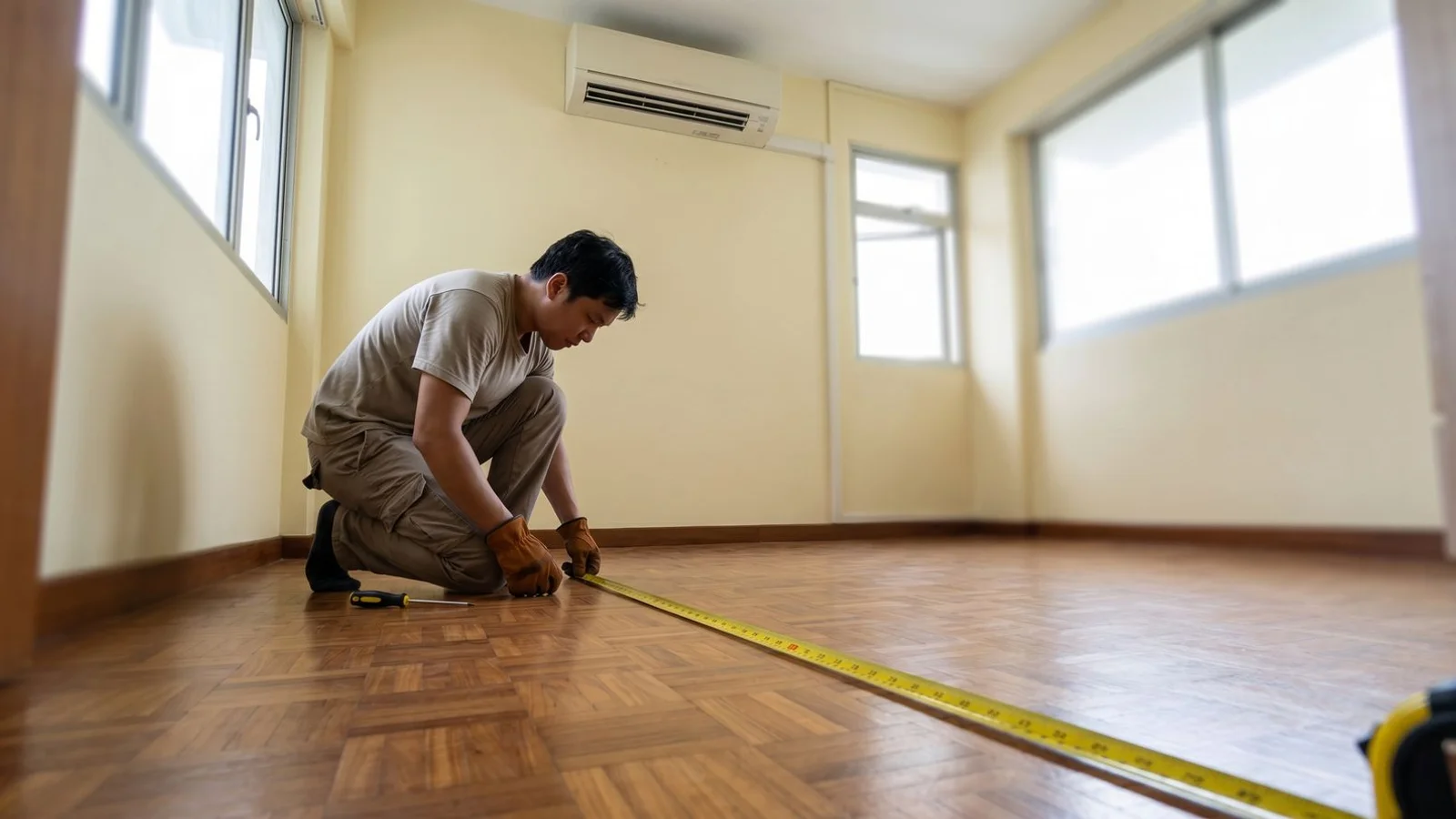
The foundation of accurate sizing starts with understanding the basic mathematics of heat removal. Our standard protocol takes your room square footage, applies a baseline multiplier, and adds a Singapore humidity uplift. A reliable starting point multiplies the room area by 60 to find the raw capacity needed.
You must then factor in the heavy energy drain required to remove moisture from the air. We see the effects of ignored humidity levels during service visits every single week. An air conditioner loses roughly 30 percent of its effectiveness just dealing with tropical moisture.
Here is the exact step-by-step process used to frame every site visit:
- Calculate the total square footage of the target room.
- Multiply that number by our baseline of 60 to 65.
- Add an extra 10 percent to handle the intense local humidity.
- Round up to the nearest standard equipment size.
Common BTU points
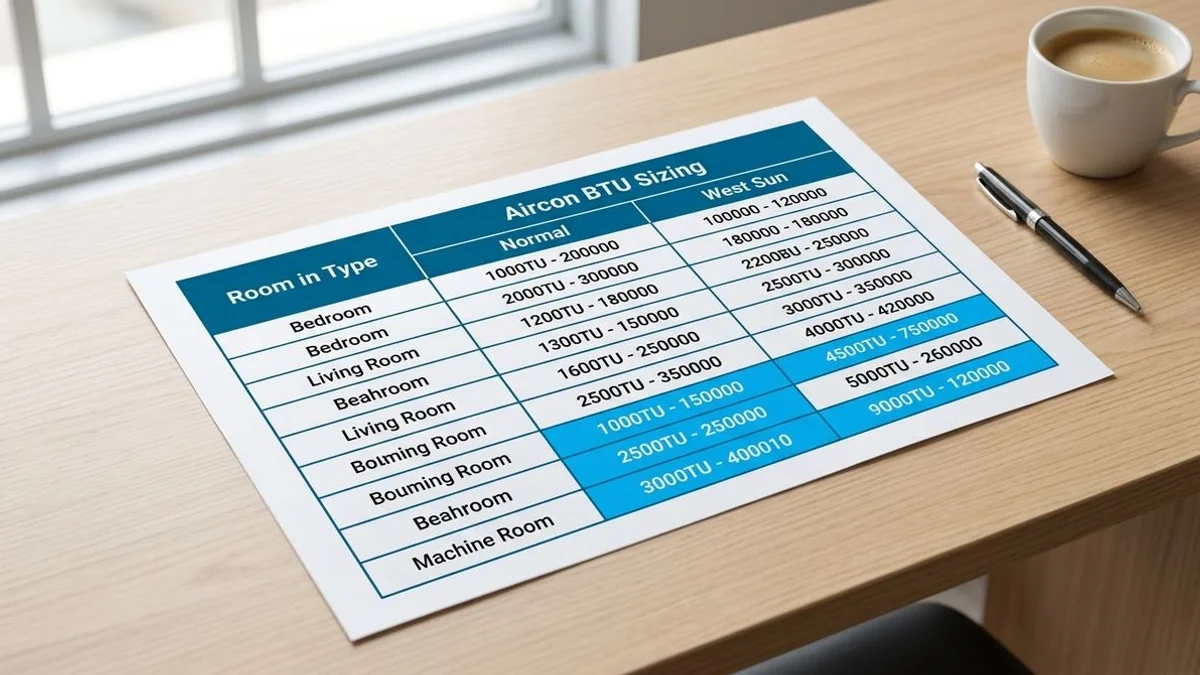
Manufacturers design split-system cooling units around four primary capacity brackets. We match your specific floor plan to ratings of 9000, 12000, 18000, and 24000 British Thermal Units. Standard enclosed bedrooms typically require the lowest tier to function efficiently.
A modern inverter compressor can adjust its output slightly, but selecting the correct base bracket remains crucial. Our technicians rely on these standardized capacity tiers for all residential installations. Purchasing a unit outside these standard points usually means paying for expensive commercial equipment.
Standard Equipment Tiers
Let’s break down where each capacity tier performs best. Our installation teams fit 9000 12000 18000 btu systems based on exact square footage calculations. The smallest 9000 BTU option handles typical guest rooms effortlessly.
Master bedrooms require the slightly stronger 12000 BTU models to maintain target temperatures. We reserve the larger 18000 and 24000 BTU units for living rooms and open-concept areas. Matching the tier to the room size prevents the compressor from overworking.
Typical HDB room sizes mapped to BTU
Most modern Built-To-Order flats share very predictable floor plans and dimensions. Our database shows that a typical master bedroom spans roughly 140 to 170 square feet. Knowing these standard measurements makes selecting the right aircon size hdb residents need incredibly straightforward.
Mismatched equipment sizing drives a significant portion of recurring repair work across the island. We flag these exact sizing details during routine visits before they become expensive emergencies. You can easily avoid premature breakdowns by pairing your specific room type with the correct capacity tier.
Our sizing specialists use a specific reference guide to quickly quote projects across the island. This table represents the standard matching protocol applied by field technicians:
| HDB Room Type | Average Size (Sq Ft) | Recommended Size |
|---|---|---|
| Common Bedroom | 110 to 130 | 9000 BTU |
| Master Bedroom | 140 to 170 | 12000 BTU |
| Standard Living Room | 250 to 300 | 18000 BTU |
| Open-Concept Living/Dining | 300 to 350 | 24000 BTU |
For a related deep-dive, see our guide on Aircon Installation Cost Guide for Singapore Households.
Why oversizing wastes energy
Many buyers assume a massive unit in a tiny bedroom will deliver superior comfort. We frequently diagnose “short cycling” issues caused by severely oversized equipment. An overly powerful unit drops the room temperature to 24 degrees Celsius in just three minutes and then shuts off.
The compressor never runs long enough to extract the thick moisture from the air. Our crews regularly see these damp rooms develop severe mold on walls and furniture. Proper dehumidification requires a steady, continuous cooling cycle.
The Financial Impact of Poor Sizing
Your electricity bill will spike if you ignore proper capacity guidelines. Our clients with improperly sized units notice immediate increases in their monthly statements. SP Group electricity tariffs reached 29.72 cents per kilowatt-hour during recent 2026 adjustments.
A poorly matched compressor constantly cycles on and off, drawing massive power surges each time. We warn customers that this constant restarting destroys electrical components prematurely. You will face expensive replacement costs when the overworked system burns out in five years instead of ten.
When to size up
Certain architectural features require a higher cooling capacity than standard calculations suggest. Our assessment process specifically identifies structural challenges that trap additional heat. A flat with large windows or high ceilings demands significantly more power throughout the day.
The basic formula falls short when dealing with intense solar radiation. We always adjust the final recommendation if your property faces extreme environmental heat loads. Modifying the baseline capacity ensures the equipment handles the heaviest afternoon temperatures.
Key Factors That Increase Cooling Load
You must account for specific layout challenges to maintain a comfortable temperature. Our installation managers check for the following heat amplifiers during every site evaluation:
- West-Facing Walls: Afternoon sun exposure requires a 10 to 15 percent capacity increase.
- Top-Floor Units: Direct heat transfer through the concrete roof slab demands extra power.
- High Occupancy: Add 600 BTU for every additional person regularly using the room.
- Cooking Heat: Open-concept kitchens adjoining living spaces generate heat that requires sizing up.
Ready to Book?
Securing a comfortable home starts with a transparent, accurate assessment of your needs. We provide honest sizing recommendations based on actual room data rather than sales targets. The fastest path to a perfectly chilled room is requesting a fixed quote from the team.
Call +65 3138 2108 to speak directly with our scheduling coordinators today. You can message us on WhatsApp or use the booking form on our contact page. We encourage you to read through our Aircon Installation page for deeper technical details.
Prompt professional service ensures your home stays cool all year round.
Frequently Asked
What BTU for an HDB master bedroom? +
Typically 9000-12000 BTU depending on size and facing.
Is bigger BTU always better? +
No — oversized units short-cycle, reducing efficiency and humidity control.
Do I need higher BTU for top-floor HDB? +
Often yes — heat soak from the roof adds 10-20% load.
Ready to Book Aircon Installation?
Same-day or next-day across Singapore. Fixed quote in writing. 90-day workmanship warranty.
Related Guides
Aircon Installation Cost Guide for Singapore Households
Cost components by system size (System 1, 2, 3, 4, 5), how brand and tick rating affect cost, hidden...
What to Expect During Aircon Installation Day
Pre-arrival checklist, typical 4-6 hours single split, 6-8 hours System 3, what's covered (trunking,...
Best Aircon Brands for Singapore (Daikin, Mitsubishi, Panasonic, Fujitsu, LG)
Daikin, Mitsubishi, Panasonic, Fujitsu, LG — strengths, parts availability, and where each excels fo...
Condo Aircon Installation in Singapore: Common Considerations
MCST approval flow, weekend rules, lift bookings, compressor bay placement — what condo aircon insta...