
Aircon Energy Efficiency Tips for Singapore Homes
Lower your SP Group bill with optimal thermostat settings, filter cadence, NEA tick rating, and small habit changes — backed by iCare's 30% case data.
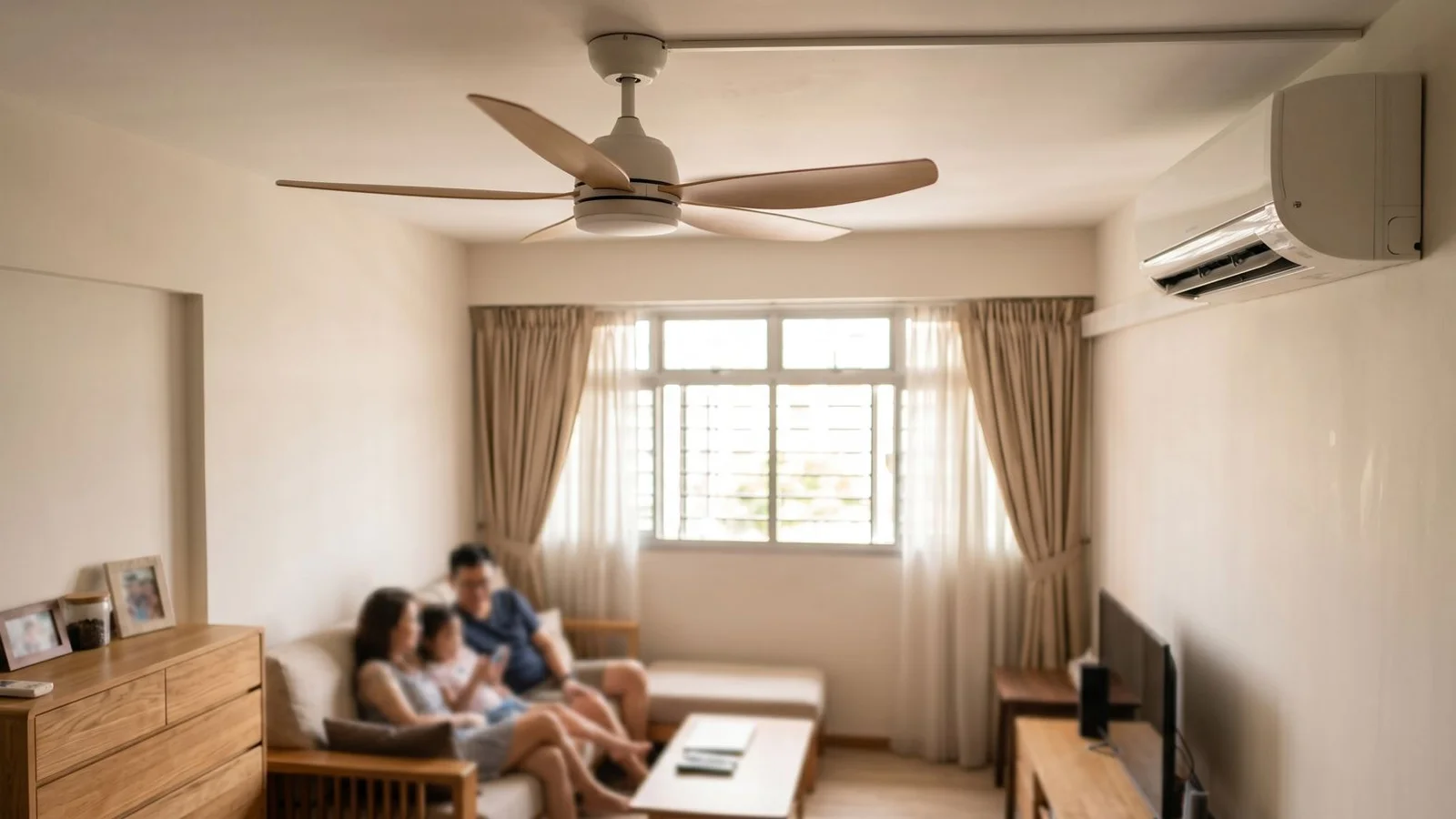
Singapore homeowners ask this question every week. You know how frustrating it is to watch your SP Group utility bill climb, even when you have not changed your daily cooling routine.
With the Q2 2026 electricity tariff reaching 29.72 cents per kWh, keeping those costs down is a genuine challenge.
We understand exactly where you are coming from. The short answer matters, but the context matters more. Getting it right is what keeps your aircon running cool and your monthly expenses low.
This guide is part of our iCare aircon servicing coverage at iCare. If you are a cost-conscious owner, let’s explore the data behind real energy savings and look at practical ways to respond. The rest of this page walks through the answer the way our technicians explain it on a Singapore service visit, using plain English and zero upsell pressure.
Optimal thermostat settings (24-25°C) and why each degree below 24 …
Optimal thermostat settings (24-25°C) and why each degree below 24 costs ~10% more. In Singapore’s heat and humidity, this is one of the most common factors that drives recurring service work. It is exactly the kind of detail iCare’s technicians flag during a routine visit before it becomes an emergency.
The Real Cost of Overcooling
Our team frequently sees households running their units at 18°C or 20°C to combat the midday heat. A recent study in partnership with Ngee Ann Polytechnic showed a different reality. Raising the temperature from 23°C to 25°C generated energy savings of up to 12 percent per degree.
We recommend sticking to the National Environment Agency (NEA) guideline of 25°C. Every degree you drop below 24°C forces your compressor to work roughly 10% harder. This extra workload translates directly into a higher SP Group bill at the end of the month.
To maintain comfort at 25°C, try these proven adjustments:
- Use the “Auto” mode to let the fan speed adjust naturally to the room temperature.
- Draw your curtains during the afternoon to block direct sunlight.
- Keep doors and windows tightly closed to prevent cool air from escaping.
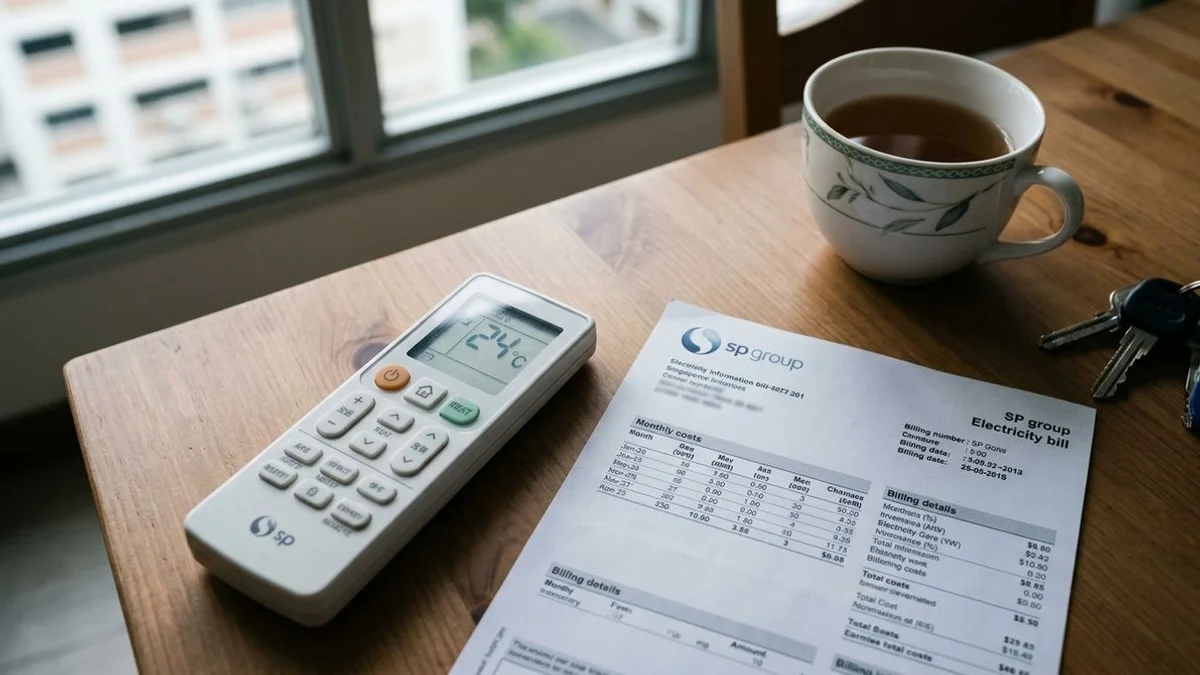
Filter cleaning cadence and ceiling-fan pairing
Filter cleaning cadence and ceiling-fan pairing. In Singapore’s heat and humidity, this is one of the most common factors that drives recurring service work. It is exactly the kind of detail iCare’s technicians flag during a routine visit before it becomes an emergency.
Maximising Airflow for Better Cooling
Our founders, James Tan and Sandra Lim, built this company in 2016 on the principle of transparent maintenance. Clogged filters are the number one culprit behind poor cooling performance. A dirty filter reduces airflow by up to 15%, which chokes your system and wastes electricity.
We strongly suggest washing your filters with mild soap and water every two to four weeks. This simple DIY habit keeps dust from settling on your evaporator coils. Once the coils get dirty, the unit loses its ability to absorb heat effectively.
Pairing your clean aircon with a ceiling fan is a highly effective strategy. Fans do not cool the air, but they create a wind-chill effect on your skin. You can run the aircon at an economical 26°C, turn on the ceiling fan, and feel just as comfortable as you would at 22°C.
NEA tick-rating impact across a 10-year ownership window
NEA tick-rating impact across a 10-year ownership window. In Singapore’s heat and humidity, this is one of the most common factors that drives recurring service work. It is exactly the kind of detail iCare’s technicians flag during a routine visit before it becomes an emergency.
Translating Ticks into Dollars
Our customers often ask if paying a premium for a 5-tick model is truly worth the upfront cash. The math strongly supports the upgrade. A 5-tick model features the highest Cooling Seasonal Performance Factor (CSPF), meaning it converts electricity into cooling far more efficiently than older systems.
According to a 2026 NEA estimate, replacing a 2-tick model with a 5-tick air conditioner saves a household roughly $303 per year. This calculation assumes eight hours of daily usage. Over a standard 10-year lifespan, that single decision keeps over $3,000 in your pocket.
We always point out that older 3-tick units from 2018 usually run on outdated refrigerants. Modern 5-tick systems use R32 refrigerant, which transfers heat better and uses significantly less power. The initial price gap disappears entirely within the first three years of ownership.
For a related deep-dive, see our guide on Aircon Servicing for HDB vs Condo vs Landed Property in Singapore.
When an upgrade pays back vs more servicing
When an upgrade pays back vs more servicing. In Singapore’s heat and humidity, this is one of the most common factors that drives recurring service work. It is exactly the kind of detail iCare’s technicians flag during a routine visit before it becomes an emergency.
The 50% Rule of Thumb
Our technicians rely on a simple financial metric called the 50% Rule when advising clients on major repairs. If a repair quote exceeds half the cost of a brand new unit, replacing the system is the smarter financial choice. Paying $1,500 to fix a failing compressor on an 8-year-old system is risky.
Well-known brands like Mitsubishi Electric Starmex or Daikin typically last between 10 and 15 years in local conditions. A unit past the 8-year mark has already lost a large percentage of its original efficiency. Pumping money into an aging machine rarely delivers long-term reliability.
We use a basic comparison matrix to help owners decide:
| Aircon Age | Problem Type | Recommendation |
|---|---|---|
| Under 5 Years | Minor leaks, sensor issues | Proceed with a professional repair. |
| 6 to 9 Years | Failed fan motor or PCB | Evaluate the repair cost against the 50% Rule. |
| Over 10 Years | Compressor failure, R22 gas | Upgrade to a new 5-tick inverter system. |
ICare’s 30% client energy reduction case in 2023
iCare’s 30% client energy reduction case in 2023. In Singapore’s heat and humidity, this is one of the most common factors that drives recurring service work. It is exactly the kind of detail iCare’s technicians flag during a routine visit before it becomes an emergency.
Real Results from Data-Driven Changes
Our commercial division partnered with a mid-sized local office facing skyrocketing electricity costs. Their cooling system consisted of multiple older R22 units running constantly at 20°C. By implementing a few strategic changes, the client saw a massive drop in consumption.
We started by raising their thermostats to a standard 24°C and setting up a strict monthly filter washing schedule. Next, the client replaced two heavily degraded condensers with new 5-tick inverter models. These combined actions slashed their cooling-related electricity usage by a verified 30% within three months.
This case study proves that efficiency is not about sacrificing comfort. Routine care, smart temperature management, and timely equipment upgrades work together to protect your budget. You can achieve similar results in your own home with a bit of consistency.
Ready to Book?
If you’re ready, the fastest path is a fixed quote: call +65 3138 2108, message us on WhatsApp, or use the booking form on our contact page. For more detail on the service itself, see iCare aircon servicing.
Frequently Asked
What's the most efficient temperature for Singapore? +
24-25°C with a ceiling fan — comfortable and efficient.
Does inverter actually save energy? +
Yes — typically 20-40% lower running cost over an inverter's lifetime.
When should I replace vs service for energy savings? +
If your unit is 10+ years old at a 1-2 tick rating, an upgrade often pays back in 3-5 years.
Related Guides
Aircon Servicing for HDB vs Condo vs Landed Property in Singapore
Singapore property type changes everything: HDB ledge access, condo MCST rules, landed multi-system ...
How Often Should You Service Your Aircon in Singapore?
Singapore humidity means most aircon needs servicing every 3-4 months. See the factors that shorten ...
How to Choose a Reliable Aircon Servicing Company in Singapore
What to ask before booking, red flags to walk away from, and the green flags a trustworthy Singapore...
Aircon Servicing vs Chemical Wash vs Chemical Overhaul: Which Do You Need?
Compare the three Singapore aircon cleaning tiers: scope, time, price band, and when each is recomme...