
How Often Should You Service Your Aircon in Singapore?
Singapore humidity means most aircon needs servicing every 3-4 months. See the factors that shorten the interval and when to bring it forward.
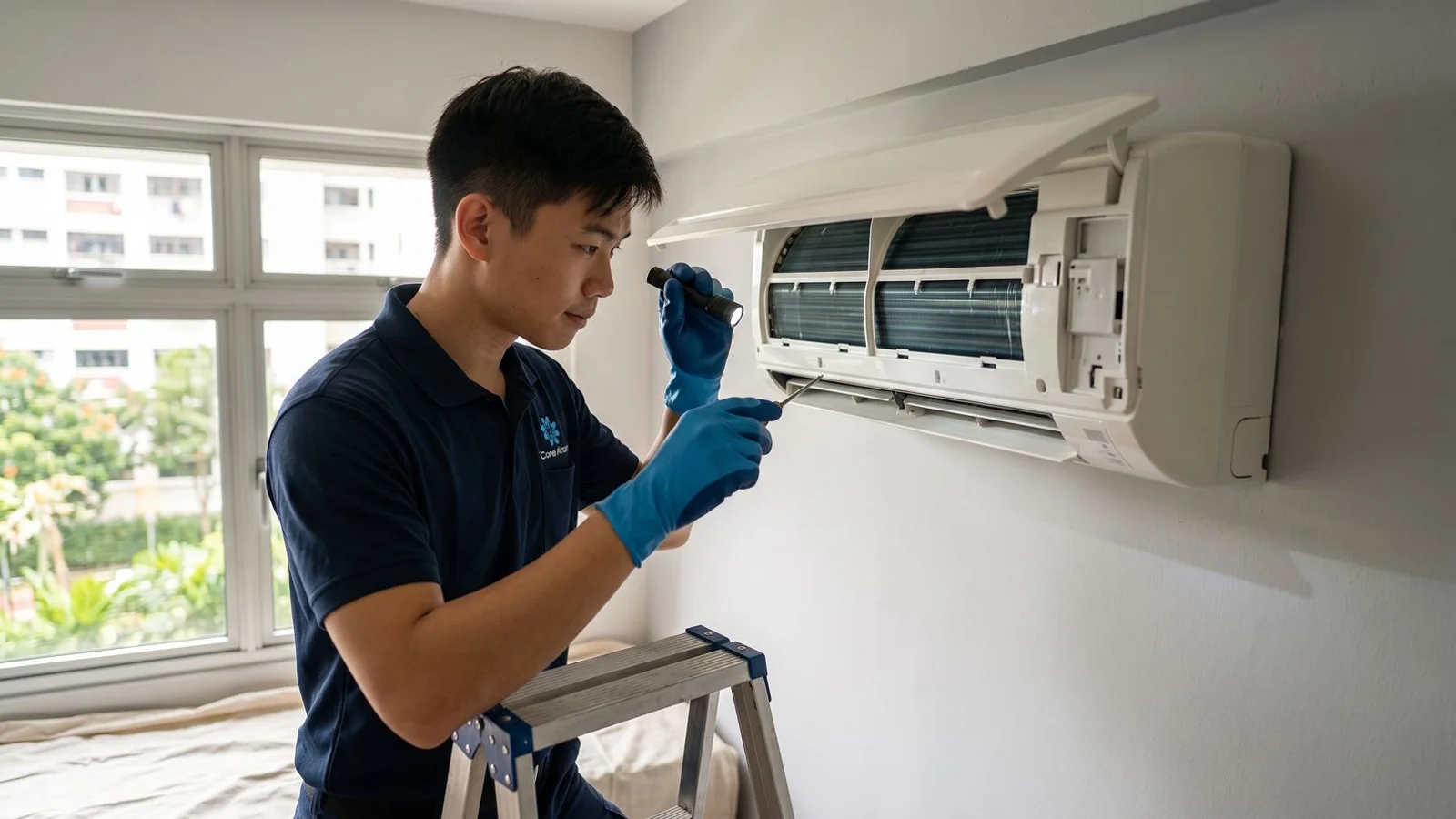
We hear questions about ideal maintenance timelines from property owners across the island almost daily. A clear maintenance plan separates a reliable cooling system from one that constantly struggles.
This guide forms a core part of the iCare aircon servicing resources provided here.
Our founders, James Tan and Sandra Lim, established this company in 2016 to offer transparent and data-driven solutions for situations exactly like this. Managing indoor humidity while keeping an eye on rising utility costs is a common challenge.
Determining exactly how often to service aircon singapore systems requires looking at hard environmental data. We will outline the specific factors that accelerate wear and tear. You will find practical steps below to protect your hardware and keep your energy consumption low.
Default interval for how often to service aircon singapore units
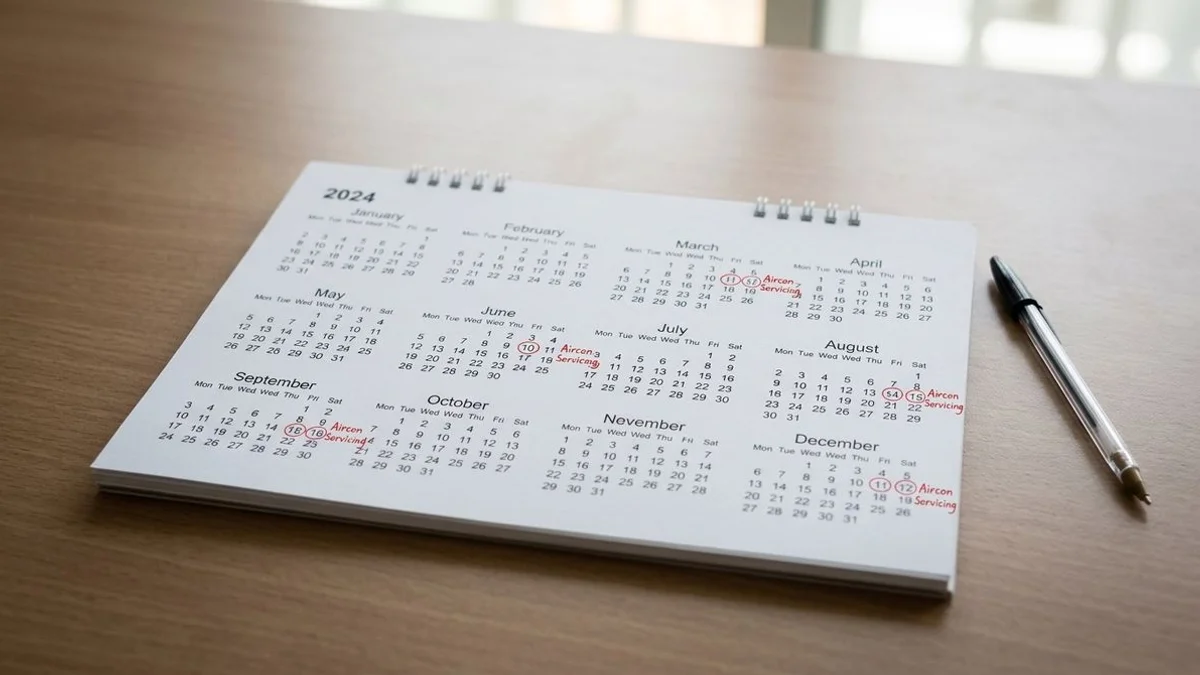
Our technicians use a quarterly maintenance schedule as the standard baseline when evaluating any residential system. The National Environment Agency explicitly advises this three-month interval to maintain cooling efficiency and preserve indoor air quality.
Singapore experiences an average relative humidity of over 80 percent throughout the year. We see how this excessive moisture creates an ideal breeding ground for mould inside your indoor blower.
The financial impact of skipping this basic upkeep is immediate and measurable. With the Q2 2026 SP Group electricity tariff sitting at 29.72 cents per kilowatt-hour, a dirty filter forces your compressor to work much harder.
Our service packages typically cost between $30 and $50 per unit, which acts as a highly cost-effective safeguard against those rising energy rates.
| Maintenance Action | Typical Singapore Cost | Practical Benefit |
|---|---|---|
| Basic Quarterly Servicing | $30 to $50 per unit | Clears minor dust blockages and prevents early mould accumulation. |
| High Utility Penalty | +$20 to $40 monthly | A dirty system consumes significantly more electricity at current 29.72 cent tariffs. |
| System 3 Replacement | $2,600 to $3,800 | Ignoring maintenance completely often leads to catastrophic compressor failure. |
Factors that shorten it
We frequently adjust these standard timelines for clients based on their unique living conditions and daily habits. Several environmental triggers force you to increase your aircon servicing frequency much faster than normal.
Many residents now work from home and push their systems past the 12-hour mark every single day. Our teams notice that running the thermostat at 22 degrees instead of the recommended 25 degrees accelerates wear significantly.
This lower setting prevents the compressor from taking necessary breaks. A two-month maintenance cycle is necessary for households with this level of heavy daily use.
Our field crews also pay close attention to the physical location of your property. Homes situated in coastal areas like East Coast Park face rapid salt corrosion on their outdoor condenser fins.
Indoor factors like pet ownership also change the equation drastically. We constantly extract thick pastes of pet dander and moisture from the primary filters of dog and cat owners.
- Pet Ownership: Animal dander binds with condensation to create stubborn blockages.
- Coastal Proximity: Sea breezes introduce corrosive salt to exposed metal piping.
- Indoor Smoking: Tobacco resin coats internal fans and traps thick layers of dust.
- Active Construction: Properties near new Build-To-Order sites suffer from massive dust influxes.
Self-check signs that it’s due now (weak airflow, musty smell, longer cool-down)
We teach clients to perform a quick sensory check every month to catch early warning signs of component fatigue. You should monitor your equipment between professional visits to prevent minor issues from escalating.
A musty or vinegar-like odour is usually the first indicator that algae has colonised the damp interior of your fan coil unit. Our technicians frequently extract thick jelly blockages from PVC condensate drain pipes when this specific smell is present.
Weak airflow represents another major red flag for your system. The room taking longer than 15 minutes to cool down means your unit is likely struggling with a dirty evaporator coil or a slow refrigerant gas leak.
We recommend performing a few basic DIY checks if you notice any of these symptoms.
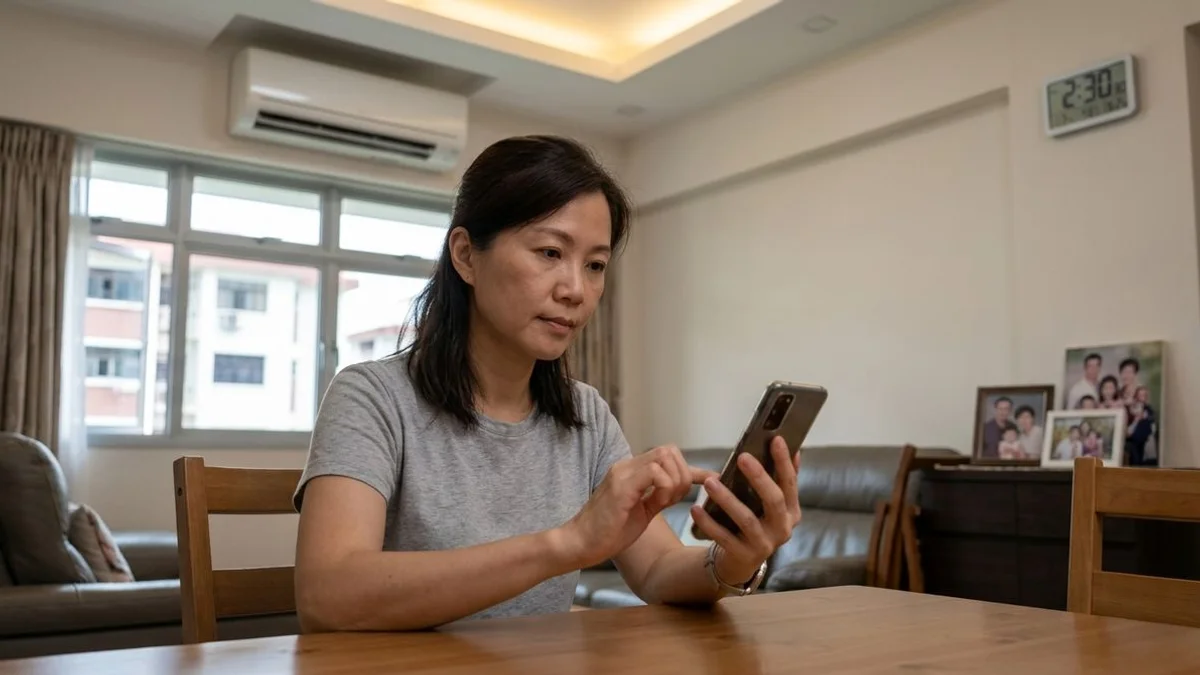
Pro-Tip: Shine a torchlight through the louvres to inspect the black blower roller. If it is coated in a layer of white fuzz, your system requires immediate professional cleaning.
For a related deep-dive, see our guide on Aircon Energy Efficiency Tips for Singapore Homes.
When to skip ahead to chemical wash instead
The Chemical Wash Process
We strongly recommend a chemical intervention when basic maintenance fails to resolve lingering odours or chronic water leaks. Standard vacuuming and wiping will simply not solve every problem inside a heavily used air conditioner.
A chemical wash involves applying specialised alkaline solutions directly to the evaporator coils to dissolve hardened grime. Our field teams often perform this procedure on older Mitsubishi Starmex or Daikin units that have missed several maintenance cycles.
Costs and Chemical Overhauls
The process safely flushes out deep bacterial growth without requiring a full dismantling of the machine. Expect to pay between $75 and $150 per unit for this service in Singapore as of early 2026.
We find this price point offers excellent value when compared to the massive cost of replacing a damaged compressor. If a wash is not enough, a complete chemical overhaul is the final step.
The overhaul process costs roughly $150 to $300 and involves taking the entire unit apart piece by piece.
Soft CTA
We make the booking process as frictionless as possible so you can get back to your day. Taking action early prevents a minor dust issue from evolving into a costly hardware failure.
Setting up a recurring schedule takes the guesswork out of maintaining your property. Our administration team actively tracks your maintenance history to ensure you never miss a critical service window.
Regular professional oversight guarantees your system operates safely. Proper care keeps your family comfortable and your utility bills predictable year-round.
Ready to Book?
We provide fast and transparent fixed quotes for all residential and commercial properties. If you are deciding how often to service aircon singapore units in your building, getting a professional baseline assessment is the safest next step.
The fastest path to secure your preferred time slot is to call +65 3138 2108.
Our team is also available via WhatsApp or through the direct booking form on our contact page. For a deeper look at the specific methods and tools used on-site, review the comprehensive guide to iCare aircon servicing.
Frequently Asked
Can I service my aircon every 6 months instead of 3-4? +
Possible for very low-use units in dry rooms; not recommended for typical Singapore living rooms.
How long does a routine servicing visit take? +
Around 15-25 minutes per fan coil; a 3-unit home is typically under an hour.
Is there a peak season for booking aircon servicing in Singapore? +
Yes — March-May and September-October are busiest; book 1-2 weeks ahead.
Related Guides
Aircon Energy Efficiency Tips for Singapore Homes
Lower your SP Group bill with optimal thermostat settings, filter cadence, NEA tick rating, and smal...
Aircon Servicing for HDB vs Condo vs Landed Property in Singapore
Singapore property type changes everything: HDB ledge access, condo MCST rules, landed multi-system ...
How to Choose a Reliable Aircon Servicing Company in Singapore
What to ask before booking, red flags to walk away from, and the green flags a trustworthy Singapore...
Aircon Servicing vs Chemical Wash vs Chemical Overhaul: Which Do You Need?
Compare the three Singapore aircon cleaning tiers: scope, time, price band, and when each is recomme...