
Is an Aircon Chemical Wash Safe for Your Unit and Family?
Yes — when done by trained technicians using NEA-permitted agents. Here's what's used, ventilation timing, and child / pet / asthma guidance.
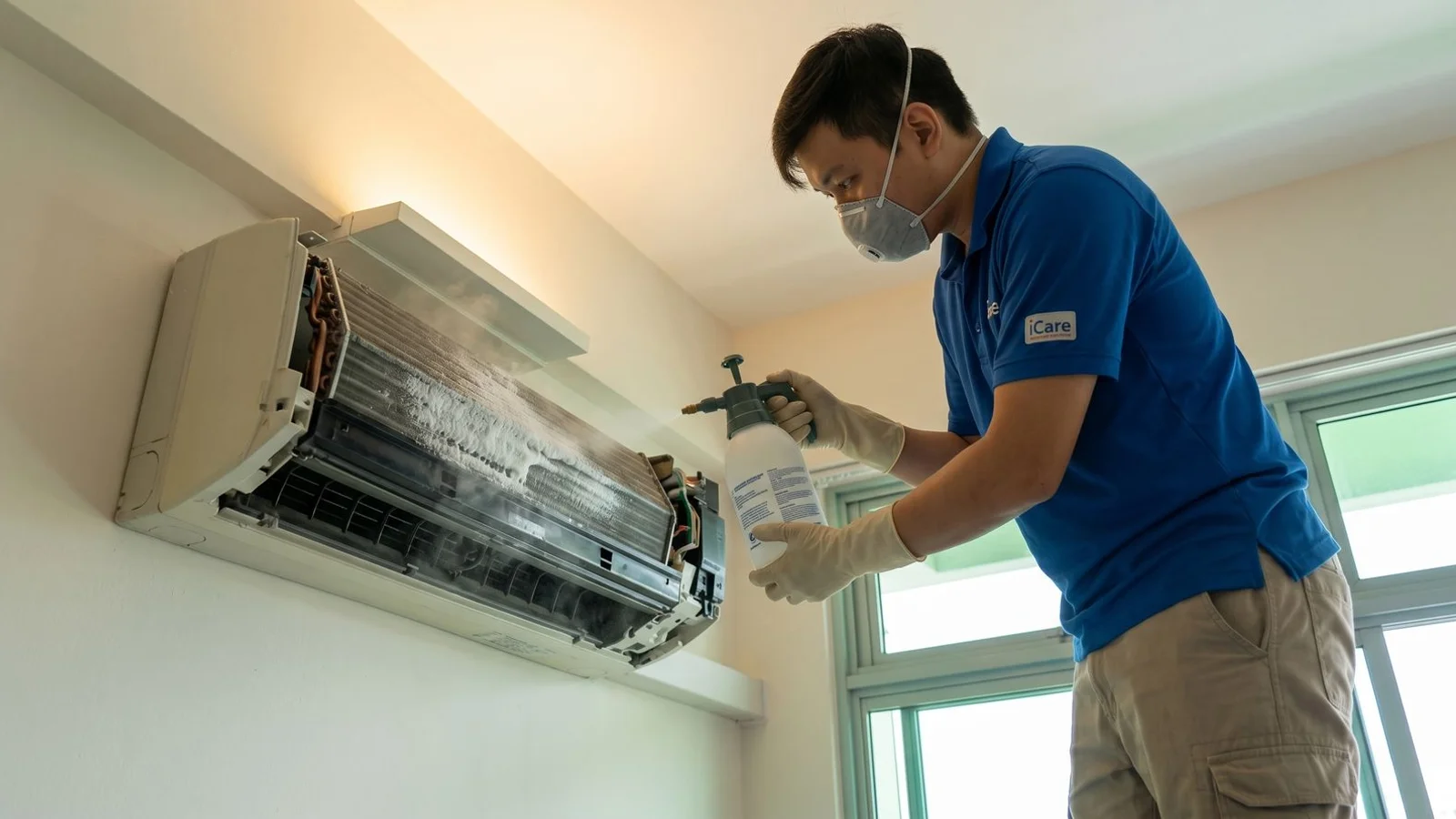
Many property owners wonder if aggressive cleaning methods might actually damage their cooling systems. We established iCare Aircon in 2016, with founders James Tan and Sandra Lim sharing a clear vision to provide high-standard air conditioning solutions. From daily service routes across Singapore, that line between effective maintenance and corrosive damage is exactly what separates a great service from a costly mistake.
Is an aircon chemical wash safe for your unit and family? The direct answer is absolutely yes, provided the technicians use approved alkaline solutions and perform a thorough clear-water flush. Properly executed, this process removes deep-seated mold without leaving harmful residues behind.
Our team handles these concerns every single week. This guide, part of our Aircon Chemical Wash coverage at iCare, explains the exact safety protocols you should expect.
Let us walk through the chemicals involved, the required ventilation steps, and the reasons why professional handling matters.
NEA-permitted chemical agents and how they’re handled
Safe chemical washing relies entirely on using eco-friendly alkaline solutions approved by the National Environment Agency (NEA). We strictly avoid harsh, unapproved acidic cleaners that can eat away at internal metals over time.
Singapore regulations require proper chemical handling to minimize environmental impact and protect household health. Most professional teams now utilize processed alkaline industrial coil cleaners, such as Mr McKenic or Cleanbee brands, which easily dilute up to seven parts water.
Our technicians prefer these specific alkaline blends because they safely break up stubborn grime and scale deposits without causing structural degradation. Alkaline cleaners also contain built-in corrosion inhibitors. These inhibitors actively prevent oxidation on your air conditioner fins after the cleaning process finishes.
| Chemical Type | Safety Profile | Effect on Coils |
|---|---|---|
| Eco-Friendly Alkaline | High (NEA Compliant) | Protects metal, prevents oxidation |
| Traditional Acidic | Low (Health hazard) | Corrodes aluminium fins over time |
Post-wash residue handling and ventilation timing
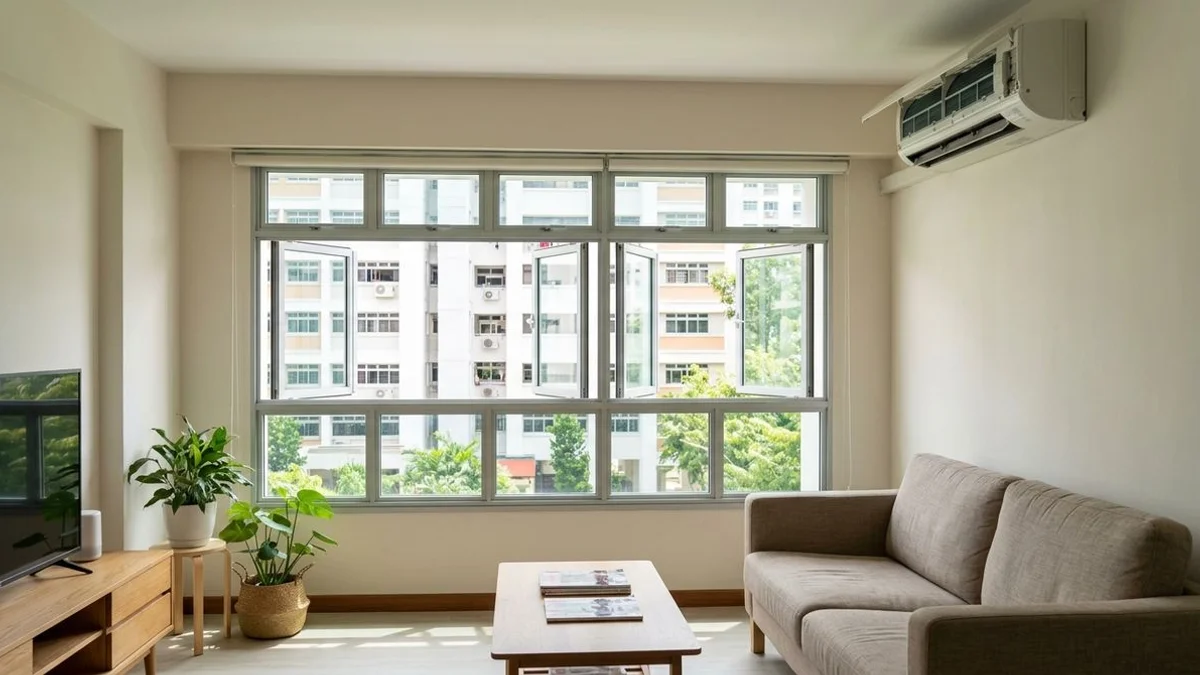
Proper residue management requires a high-pressure water flush immediately following the chemical application, followed by 1 to 2 hours of room ventilation. We ensure zero chemical traces remain inside the blower or evaporator coil before turning the system back on.
Leaving any chemical residue behind is a critical failure in the servicing process. Technicians use a pressurized water jet to rinse the alkaline solution completely out of the drainage pan and pipes. The water must run entirely clear before the unit is reassembled.
Our post-wash procedure prioritizes healthy indoor air quality, aligning with Singapore Standard SS 554 guidelines. Lingering chemical scents can temporarily disrupt comfort if the space remains sealed.
You should observe the following ventilation steps immediately after your service:
- Open all windows and doors in the serviced room.
- Run the air conditioning unit on “Fan Mode” at maximum speed.
- Wait at least 60 to 120 minutes before closing the room.
- Ensure the NEA target of keeping indoor CO2 below 800 ppm is supported by fresh air flow.
Child / pet / asthma-sensitive household guidance
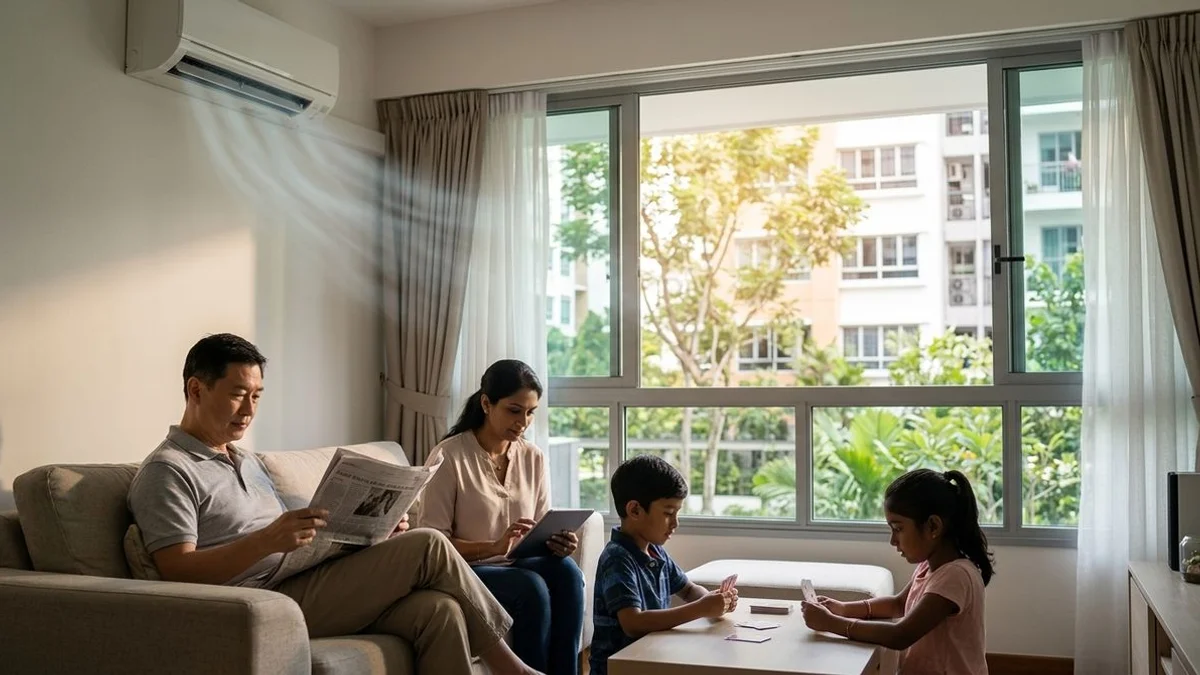
Chemical washing is completely safe for vulnerable households when technicians use neutralized solutions and enforce strict flushing protocols. We prioritize VOC-free clearing methods to protect sensitive respiratory systems from unnecessary irritation.
Asthma triggers in Singapore often stem from indoor mold and trapped particulate matter (PM2.5). A thorough chemical overhaul actually improves these conditions by eradicating biological contaminants hidden deep within the fan barrel.
Our cleaning agents do not pose an inhalation risk once properly rinsed and diluted. However, sensitive individuals should take simple precautions during the actual appointment.
- Keep children and pets in a separate, well-ventilated room while technicians work.
- Wait until the post-wash ventilation period is fully complete before re-entering.
- Request a final wipe-down of the exterior casing using just clean water.
For a related deep-dive, see our guide on What to Expect During an Aircon Chemical Wash Visit.
Technician PPE and safety procedure
Safety remains the top priority during every service visit, protecting both the homeowner and the service crew. We follow stringent safety protocols, requiring N95 masks, chemical-resistant gloves, and safety goggles during every chemical wash.
Protecting your home environment requires careful preparation before any bottles are opened. The setup process involves placing heavy-duty waterproof drop cloths over your flooring and furniture.
Our team then attaches a specialized catchment bag tightly around the indoor unit. This bag funnels all the flushed wastewater, dislodged mold, and chemical runoff directly into a large container.
Proper disposal follows local environmental guidelines, ensuring the wastewater leaves your property entirely. The contaminated water is never poured down your bathroom sink or toilet.
Why DIY chemical wash is unsafe
Attempting a DIY chemical wash is highly dangerous because incorrect chemical ratios will permanently corrode your aluminium evaporator coils. We constantly see destroyed units that require complete system replacements due to improper home maintenance.
Off-the-shelf aerosol cleaners often sit on the metal fins for too long. When this happens, the acidic reactions eat through the thin metal, causing severe refrigerant gas leaks.
Fixing this specific type of damage is a massive financial burden. According to late 2025 industry data, replacing an aircon evaporator coil in Singapore generally costs between S$200 and S$500. If the unit is older, the entire system might need replacing, pushing costs well over S$2,000.
Avoid these costly risks by noting these common DIY failures:
- Failing to rinse the chemicals completely, leading to internal rot.
- Spraying high-pressure water directly into the printed circuit board (PCB).
- Bending the delicate cooling fins, which restricts critical airflow.
- Using unapproved industrial solvents that release toxic fumes into the bedroom.
Ready to Book?
If you’re ready, the fastest path is a fixed quote: call +65 3138 2108, message us on WhatsApp, or use the booking form on our contact page. For more detail on the service itself, see Aircon Chemical Wash.
Frequently Asked
How long should I wait before sleeping in the room? +
After full ventilation and cooling test (~30-60 min); your technician will confirm.
Is chemical wash safe for asthma sufferers? +
Yes when properly ventilated; steam cleaning is also a chemical-free option.
Can pets be in the room during the wash? +
Best to keep them in another room until the room is fully ventilated.
Ready to Book Aircon Chemical Wash?
Same-day or next-day across Singapore. Fixed quote in writing. 90-day workmanship warranty.
Related Guides
What to Expect During an Aircon Chemical Wash Visit
From cover protection to final cooling test — the exact step-by-step of an iCare chemical wash, typi...
Aircon Chemical Wash vs Chemical Overhaul: Which Do You Need?
Side-by-side: scope, time, price band, and unit-condition triggers for chemical wash ($80-150) vs fu...
Aircon Chemical Wash vs General Servicing: When Is Each Enough?
Most Singapore homes don't need a chemical wash every visit. Here's when general servicing is enough...
How Often Should You Do an Aircon Chemical Wash?
Most Singapore homes need a chemical wash every 12-18 months. See the factors that shorten the inter...