
Inverter vs Non-Inverter Aircon: Which Is Right for Singapore?
How each works, upfront price gap, monthly bill difference, payback timeline (3-5 years typical), durability — Singapore decision rule.
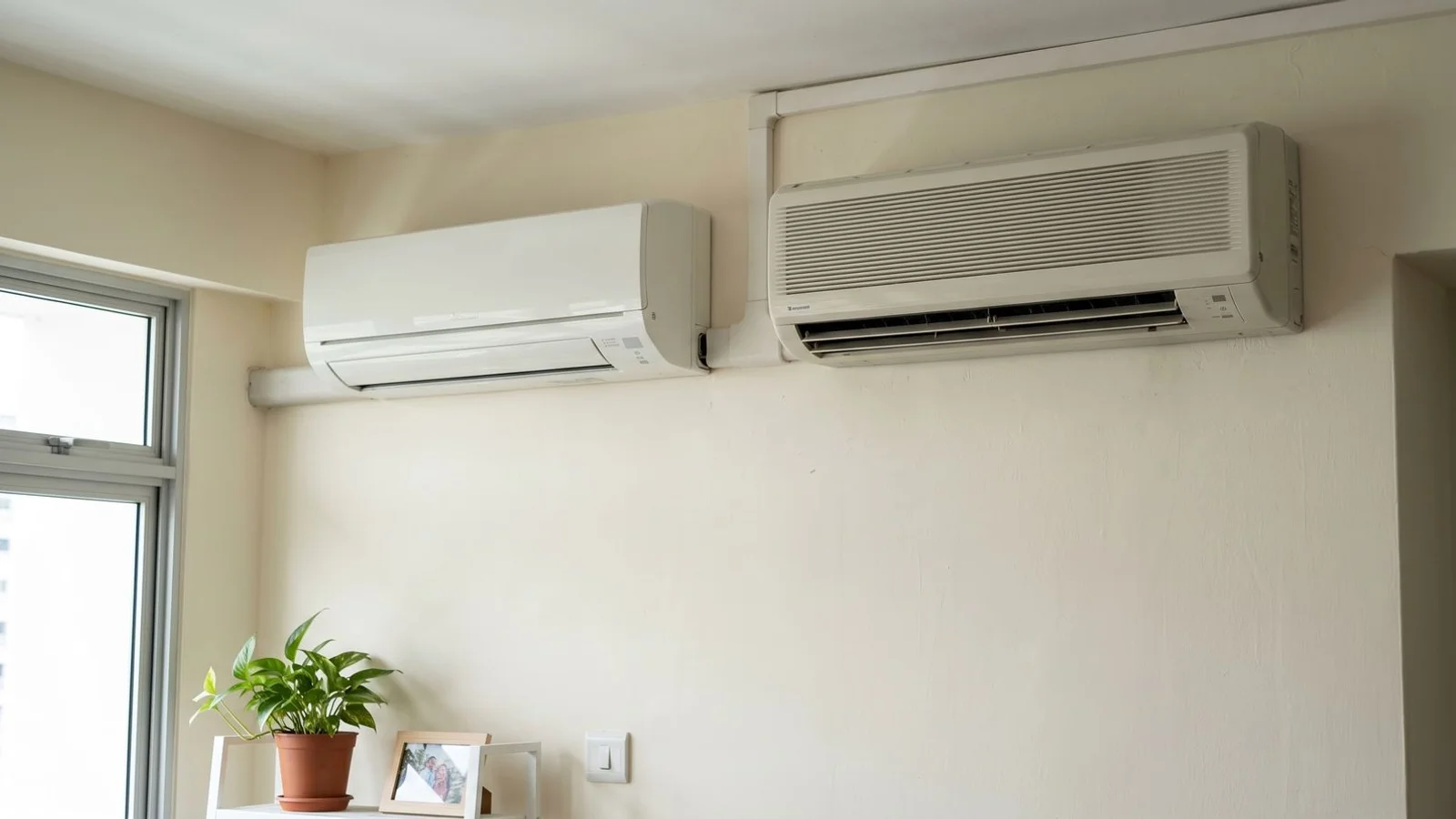
Singapore homeowners ask about the inverter vs non-inverter aircon debate every single week. Making the wrong choice here can quietly double your monthly utility bill. When James Tan and Sandra Lim established iCare Aircon in 2016, they witnessed directly how a mismatched system drained family budgets.
This guide forms a key part of our Aircon Installation coverage. We know many budget-conscious buyers struggle to justify the higher upfront price of an inverter unit. The details below break down the reality of these machines in plain English.
Let us look at the exact numbers shared during our daily service visits.
How each works in plain English
A non-inverter aircon runs at full power until the room is cold and then shuts off, while an inverter model constantly adjusts its speed to maintain a steady temperature. We find that the biggest difference lies inside the compressor technology.
Our technicians frequently repair older systems damaged by this aggressive stop-start cycle. Every time a non-inverter compressor kicks back on, it creates a massive power surge. This constant cycling leads to annoying temperature fluctuations and higher wear and tear.
We recommend inverter technology because it operates much more like a car accelerator. The compressor adjusts its speed dynamically to maintain a steady temperature without ever fully shutting down.
| Feature | Non-Inverter Aircon | Inverter Aircon |
|---|---|---|
| Compressor Operation | Fixed speed (100% or 0%) | Variable speed (adjusts constantly) |
| Temperature Control | Fluctuates constantly | Steady and precise |
| Noise Level | Louder start-up surges | Quieter, continuous hum |
Upfront price gap (typically 20-40%)
Buying a non-inverter aircon generally saves you 20% to 40% right at the cashier compared to an inverter model. Our clients always ask about this initial purchase cost first. A popular System 3 inverter unit from brands like Mitsubishi Starmex or Daikin iSmile costs around $2,500 to $3,500 in 2026.
We see many homeowners tempted by the cheaper non-inverter alternatives. The lower price tag looks great during a costly home renovation. You are paying less because the hardware relies on simpler, older mechanics.
Our advice is to look past that initial receipt. The National Environment Agency (NEA) actively encourages buyers to select units with higher energy efficiency ratings. Most basic non-inverter models struggle to achieve the coveted 5-tick rating.
Hidden costs of a cheaper unit
- Frequent breakdowns: The hard stop-start motion wears out parts faster.
- Higher repair fees: Replacing components on older models can get expensive.
- Lower resale value: Second-hand buyers actively seek modern, energy-efficient units.
- Lost government rebates: Older technology often misses out on current climate vouchers.
Monthly bill difference for Singapore use
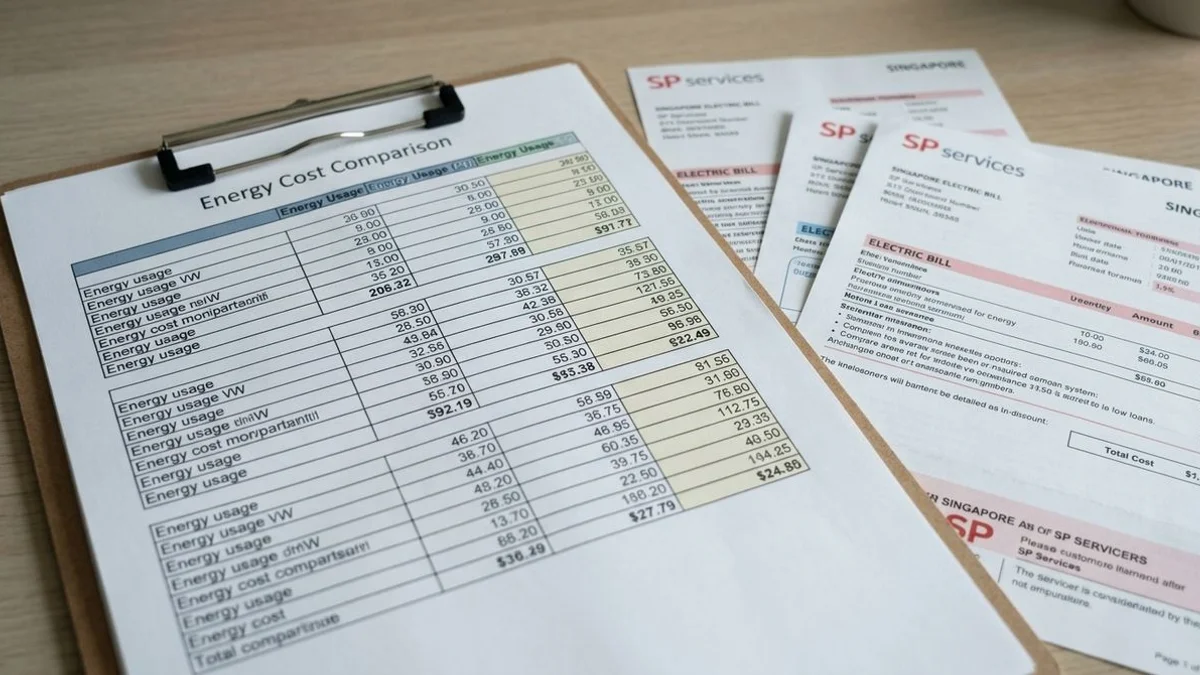
An inverter aircon typically reduces monthly cooling costs by 30% to 50% compared to a standard non-inverter unit. Our data shows that cooling accounts for nearly 37% of a typical Singaporean household electricity bill.
- Current Tariff: SP Group regulated rate is 29.72 cents per kWh for the second quarter of 2026.
- Average Usage: An HDB 4-room flat averages about $120 a month in total electricity.
- Cooling Impact: An inefficient compressor forces that number significantly higher.
We calculate that upgrading to a 5-tick inverter provides massive financial relief over time. This efficiency drop means the compressor does not have to draw maximum power constantly.
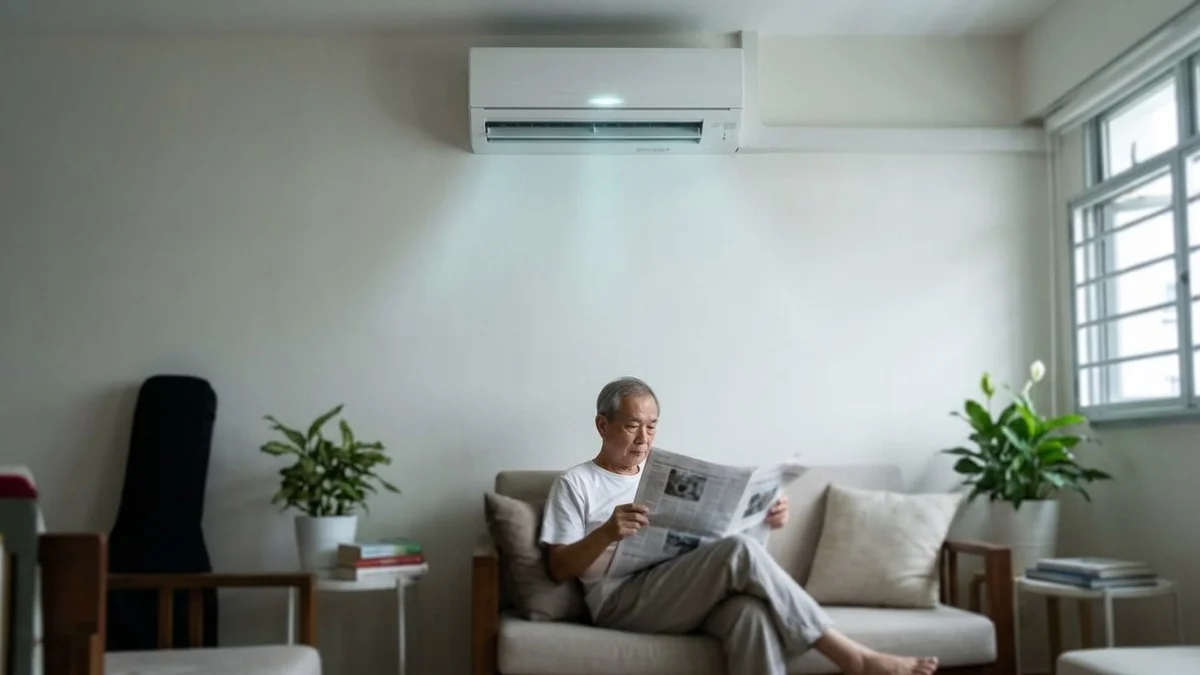
Our customers regularly report saving anywhere from $150 to over $250 a year just by making the switch. The steady operation of the variable-speed motor keeps your SP Group bill predictable.
For a related deep-dive, see our guide on What Size Aircon Do I Need? BTU Sizing for Singapore Homes.
Payback timeline (typical 3-5 years)
The energy savings from an inverter aircon usually cover its higher upfront cost within two to three years of daily use. Is an inverter aircon worth it for your specific home? We generally tell clients that the exact breakeven point depends heavily on your daily cooling habits.
Our technicians notice that heavy users recover their investment the fastest. Leaving the bedroom unit on for eight hours every night accelerates your return on investment.
| Usage Pattern | Daily Hours | Estimated Payback Period |
|---|---|---|
| Heavy Use (Master Bedroom) | 8 - 10 hours | 1.5 to 2.5 years |
| Moderate Use (Living Room) | 4 - 6 hours | 3 to 4 years |
| Light Use (Guest Room) | Under 2 hours | 5+ years |
We highly advise maintaining a room temperature of 24 or 25 degrees Celsius to maximise these savings. Pushing the remote down to 18 degrees forces even the best compressor to work much harder.
When non-inverter still makes sense (rental, low-use rooms)
A non-inverter unit remains a smart choice for guest rooms or spaces used less than an hour a day. Some situations genuinely do not require expensive, high-efficiency hardware.
We only recommend a basic unit for spaces that rarely see any action. A spare guest room used once a month is a perfect candidate for older technology.
We also see landlords choosing cheaper models for short-term rental properties to keep initial capital low. Tenants usually pay their own SP Group bills, making long-term efficiency less of a priority for the property owner.
Paying top dollar for a 5-tick system in a rarely occupied storeroom is simply a waste of money.
Our team will always point out these specific use cases during a site visit. Matching the hardware to the room’s actual purpose prevents unnecessary spending.
How iCare Decides On-Site
Our diagnostic process starts by checking coils, drainage, airflow, and gas pressure before recommending any new hardware. A proper inspection protects your budget. Our technicians never push the most expensive option automatically.
Matching the hardware to the actual layout and usage patterns of your flat is the main priority. Sometimes a quick servicing or a chemical wash resolves a cooling issue completely. We know replacing the entire unit is not always the only answer.
Transparent pricing and clear steps
- Written quotes: You receive a detailed breakdown before any tools come out.
- Clear explanations: The technician will show you exactly why a repair or replacement is needed.
- No hidden fees: The price you see on the assessment form is the final price you pay.
Ready to Book?
You can secure a fixed quote immediately by calling +65 3138 2108 or using our online booking form. Booking a reliable service team should be the easiest part of your day.
We provide clear, transparent pricing to get your home cooling properly again. Reach out today: call +65 3138 2108, message us on WhatsApp, or use the booking form on our contact page.
Our team is ready to answer any specific questions you have about your property. For more detail on the service itself, please review our Aircon Installation guide.
Frequently Asked
Is inverter always worth it? +
For high-use rooms yes; for rarely-used guest rooms non-inverter can pencil out.
Does inverter cool faster? +
It modulates better for steady comfort; raw cool-down speed is similar.
Are inverter units more expensive to repair? +
Slightly — PCBs are more complex; iCare keeps common boards in stock.
Ready to Book Aircon Installation?
Same-day or next-day across Singapore. Fixed quote in writing. 90-day workmanship warranty.
Related Guides
What Size Aircon Do I Need? BTU Sizing for Singapore Homes
BTU formula by room size, common HDB/condo room mappings, why oversizing wastes energy, and when to ...
Aircon Installation Cost Guide for Singapore Households
Cost components by system size (System 1, 2, 3, 4, 5), how brand and tick rating affect cost, hidden...
What to Expect During Aircon Installation Day
Pre-arrival checklist, typical 4-6 hours single split, 6-8 hours System 3, what's covered (trunking,...
Best Aircon Brands for Singapore (Daikin, Mitsubishi, Panasonic, Fujitsu, LG)
Daikin, Mitsubishi, Panasonic, Fujitsu, LG — strengths, parts availability, and where each excels fo...