
NEA Energy Label and Tick Rating Explained
What the NEA tick rating measures, the 1-5 scale, and the typical SP Group bill difference between a 3-tick and a 5-tick over 10 years.
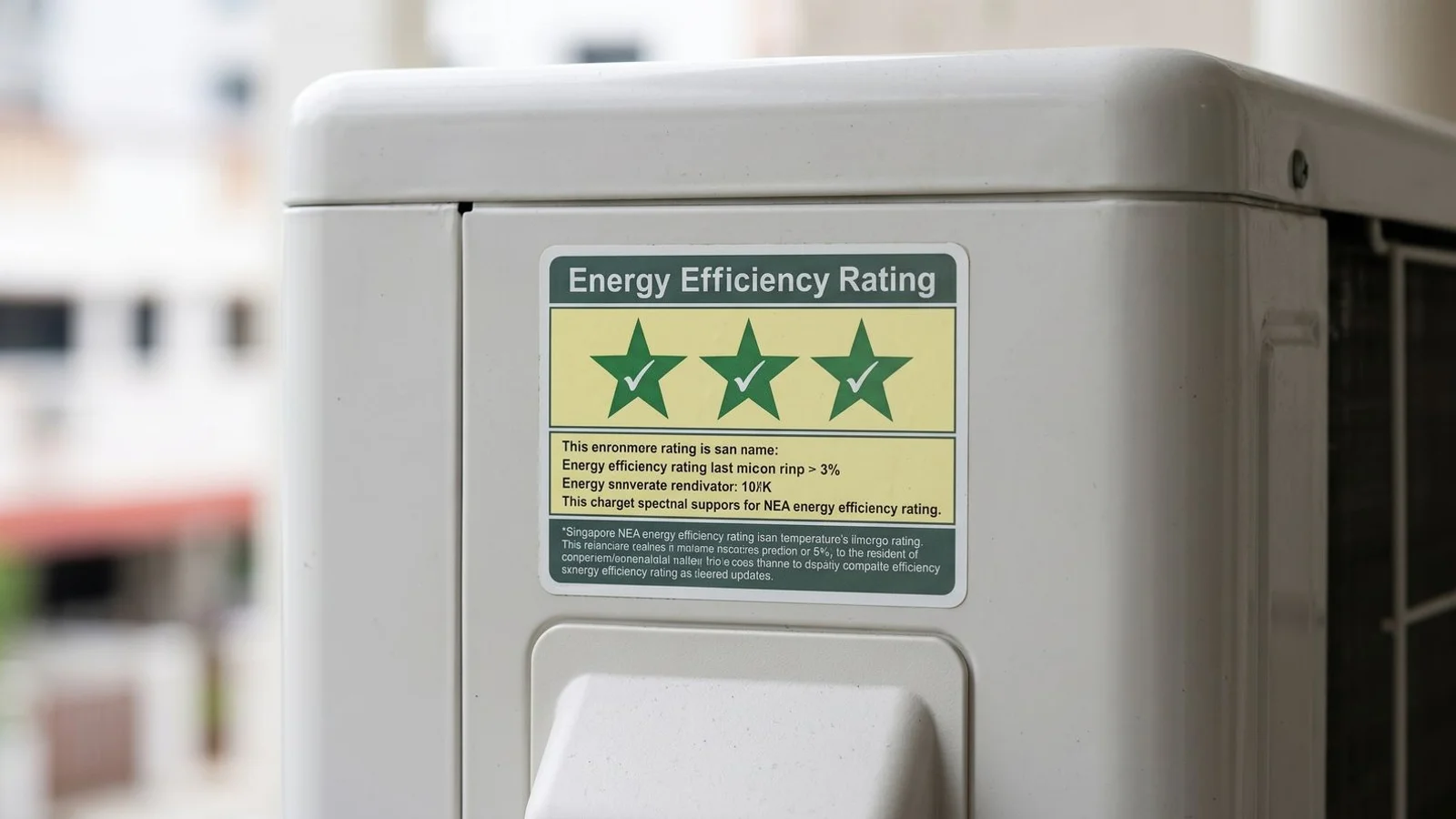
Every single week, homeowners ask us if paying extra for a top nea aircon tick rating is actually justified. We founded iCare Aircon back in 2016, with James Tan and Sandra Lim leading the charge to provide straightforward cooling solutions.
The real challenge is looking past the sticker price to understand long-term running costs. Our team created this guide as part of our core Aircon Installation resources to cut through the technical jargon.
You will see a massive divide between basic models and high-efficiency systems when the SP Group bill arrives. We want to show you the precise difference the nea energy label makes on your monthly utility expenses.
The numbers speak for themselves.
Our experts will break down the scale, compare real-world electricity costs, and explain how to verify your next purchase. This direct breakdown gives you the clarity needed to make a smart investment.
What NEA tick rating measures (annual kWh + COP)
The NEA tick rating measures your air conditioning unit’s energy efficiency using a metric called the Cooling Seasonal Performance Factor, or CSPF. We rely on this metric because it shows exactly how well a system converts electricity into cold air over a typical tropical year. High CSPF numbers mean better efficiency and lower running costs for your home.
The energy label displays two critical pieces of data for any buyer. Our technicians recommend looking closely at the annual kilowatt-hour figure rather than just counting the green ticks. This specific number tells you the estimated electricity usage based on running the unit regularly.
Here is what you need to calculate your actual running cost:
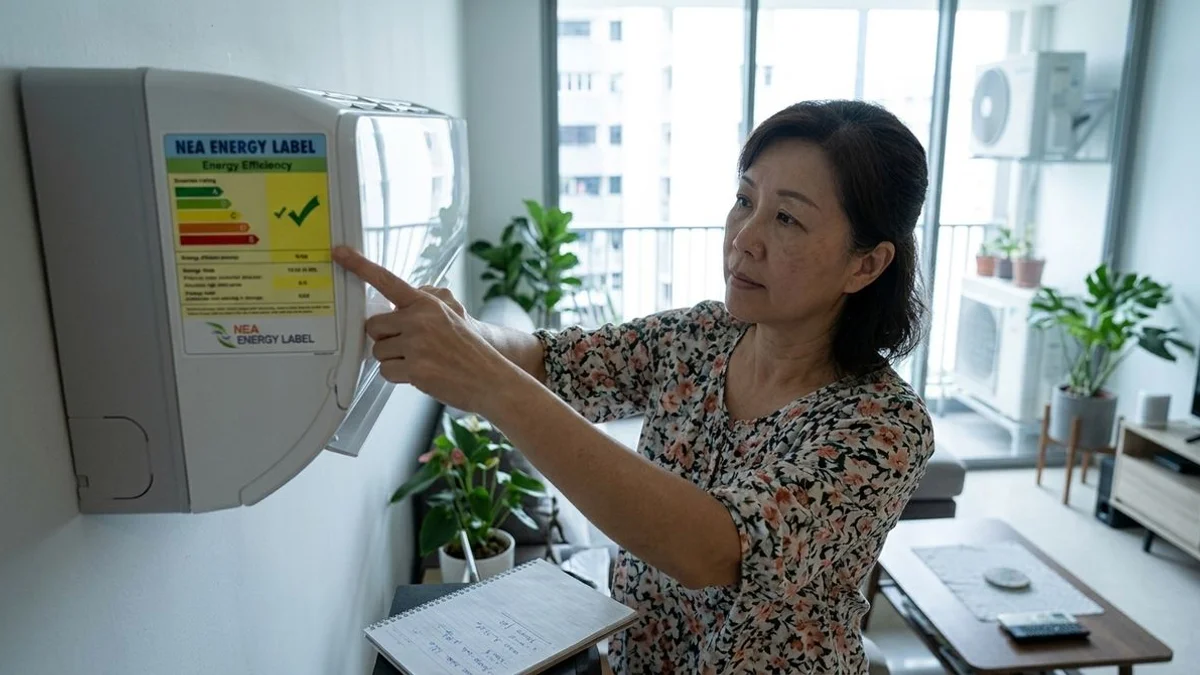
- Locate the Annual kWh: Find this number printed clearly on the NEA sticker.
- Check the Current Tariff: The SP Group electricity rate for the second quarter of 2026 sits at 29.72 cents per kWh, inclusive of GST.
- Do the Math: Multiply the unit’s annual kWh by 0.2972 to reveal your estimated yearly expense.
- Factor in Usage: Adjust the final number up or down depending on whether you run the system for eight hours a night or leave it on constantly.
Our installation team frequently points out that knowing this formula prevents nasty billing surprises. Buyers often focus entirely on the upfront hardware price and ignore the long-term operational expenses. You can make a highly accurate budget prediction by simply running these calculations before making a deposit.

1-5 tick scale and minimum mandatory standard
The scale currently ranges from one to five ticks, with five representing the highest level of energy efficiency available. We want to clarify that a two-tick rating is the absolute legal minimum required by the authorities since 2022. Anything lower than two ticks fails to meet Singapore’s Minimum Energy Performance Standards, commonly known as MEPS.
The government continuously raises the bar to meet national green initiatives. Our industry saw significant regulatory shifts starting in April 2025, pushing efficiency requirements even higher across the board. The National Environment Agency now mandates strict baseline performance criteria that effectively push older, less efficient models out of the market entirely.
Understanding the current market landscape helps you choose wisely:
| Tick Rating | Efficiency Level | Market Availability in 2026 |
|---|---|---|
| 1-Tick | Lowest | Effectively obsolete under current MEPS regulations. |
| 2-Tick | Minimum Legal Standard | Budget models that just scrape past regulatory requirements. |
| 3-Tick | Average | Mid-range systems that offer a basic balance of cost and cooling. |
| 4-Tick | High | Recommended baseline for modern homes using newer refrigerants. |
| 5-Tick | Exceptional | Premium systems delivering maximum savings on monthly utility bills. |
We always advise clients that aiming for the minimum standard often leads to maximum regret. A two-tick unit might look cheap on the showroom floor, but the heavy electricity consumption quickly erases any initial savings. You are much better off securing a four or five-tick system to protect yourself against future tariff increases.
Typical SP Group bill difference between 3-tick and 5-tick over 10 years
A 5 tick aircon typically uses about 30% to 33% less electricity than an older three-tick system. We calculate that this efficiency gap translates to hundreds of dollars in savings per unit over a standard ten-year lifespan. Upgrading from an outdated system to a top-tier inverter model creates a noticeable drop in your monthly SP Group charges.
Consider a realistic scenario using current data. Our team bases these figures on the Q2 2026 electricity tariff rate of 29.72 cents per kilowatt-hour. A standard three-tick system running regularly might consume around 1,000 kilowatt-hours annually, costing you roughly $297 a year per unit.
The math changes significantly when you step up to a premium model:
- The 5-Tick Advantage: A highly efficient five-tick model typically drops that consumption down to about 650 kilowatt-hours a year.
- Annual Savings: This reduction lowers your yearly cost to roughly $193 for that single unit.
- Household Impact: If you run three separate units in an HDB flat, the savings multiply rapidly.
- The 10-Year Horizon: Over a decade, that single five-tick unit saves you over $1,000 compared to the three-tick alternative.
We find that these accumulated savings easily cover the premium price tag of a high-efficiency unit within the first two or three years. The initial sting of the purchase price fades quickly once the lower utility bills start arriving. You keep all the financial benefits for the remaining seven to eight years of the system’s life.
For a related deep-dive, see our guide on What Size Aircon Do I Need? BTU Sizing for Singapore Homes.
Why iCare leans toward 4-5 tick for the 30% energy reduction promise
We highly recommend four and five-tick units because they consistently deliver on the promise of slashing energy consumption by 30% or more. These premium models feature advanced inverter technology that allows the compressor to adjust its speed dynamically to maintain a consistent temperature. Older models constantly turn on and off, which drains an enormous amount of power during every restart cycle.
Modern high-efficiency systems also utilize eco-friendly refrigerants like R32. Our technicians prefer installing R32 units because they transfer heat far more effectively than the phased-out R410A chemical. This superior heat transfer is a major reason why modern units achieve such stellar Cooling Seasonal Performance Factor scores.
The iCare Performance Standard: A strict focus on long-term value dictates everything we do. We refuse to compromise on efficiency when fighting rising energy costs.
Top-tier brands like Daikin and Mitsubishi Electric dominate the high-efficiency space for good reason. They combine smart sensors, advanced refrigerants, and exceptional build quality to minimize electrical waste. Our team regularly sees these specific units outperforming cheaper alternatives by a wide margin. You receive a quieter, colder room without the financial guilt of running the system all night.
How to verify tick rating on a product
You must always cross-reference the energy label with official sources to ensure you are getting exactly what you pay for. We strongly advise checking the specific model number on the National Environment Agency database before signing any purchase agreement. Retailers sometimes display outdated marketing materials or group different models under a single generic display tag.
Verifying the information protects you from purchasing an obsolete unit that fails current Minimum Energy Performance Standards. Our installation crew has seen cases where homeowners bought clearance stock that barely met the old regulatory baseline. Taking two minutes to check the official registry guarantees your new system delivers the expected energy savings.
Follow these steps to confirm a unit’s true efficiency status:
- Locate the Exact Model Number: Find the alphanumeric code on the manufacturer’s specification sheet, not just the brand name.
- Visit the NEA Database: Access the official Mandatory Energy Labelling Scheme registry online.
- Search and Compare: Enter the model number to pull up the exact Cooling Seasonal Performance Factor and annual energy cost.
- Match the Components: Ensure both the indoor blower and outdoor compressor model numbers match the registered system.
We consider this verification process a mandatory step for any smart buyer. A salesperson’s verbal assurance cannot override the hard data published by the regulatory authorities. You secure complete peace of mind when the official documentation aligns perfectly with your purchase order.
Ready to Book?
If you are ready to upgrade your cooling setup, the fastest path is securing a fixed, transparent quote. We are standing by to help you select a highly efficient, 5 tick aircon that perfectly matches your space.
Reach out right now to secure your installation date.
Give us a call at +65 3138 2108, drop a quick message on WhatsApp, or use the simple booking form located on our contact page. Our technicians provide straightforward advice without any aggressive sales tactics.
You can review more details about the entire process by visiting our comprehensive Aircon Installation resource section.
Frequently Asked
Is a 5-tick aircon worth the extra cost? +
For typical Singapore living-room use, payback is usually 3-5 years.
Does tick rating matter for low-use rooms? +
Less so — for a guest room a 3-tick may be sufficient.
Where can I check a unit's tick rating? +
On the NEA energy label affixed to the unit and on NEA's product database.
Ready to Book Aircon Installation?
Same-day or next-day across Singapore. Fixed quote in writing. 90-day workmanship warranty.
Related Guides
What Size Aircon Do I Need? BTU Sizing for Singapore Homes
BTU formula by room size, common HDB/condo room mappings, why oversizing wastes energy, and when to ...
Aircon Installation Cost Guide for Singapore Households
Cost components by system size (System 1, 2, 3, 4, 5), how brand and tick rating affect cost, hidden...
What to Expect During Aircon Installation Day
Pre-arrival checklist, typical 4-6 hours single split, 6-8 hours System 3, what's covered (trunking,...
Best Aircon Brands for Singapore (Daikin, Mitsubishi, Panasonic, Fujitsu, LG)
Daikin, Mitsubishi, Panasonic, Fujitsu, LG — strengths, parts availability, and where each excels fo...