
Why Is My Aircon Making a Loud Noise? Diagnosis Guide
Rattling, buzzing, hissing, grinding, clicking — what each aircon noise means in plain English, urgency tier, and when to power off immediately.
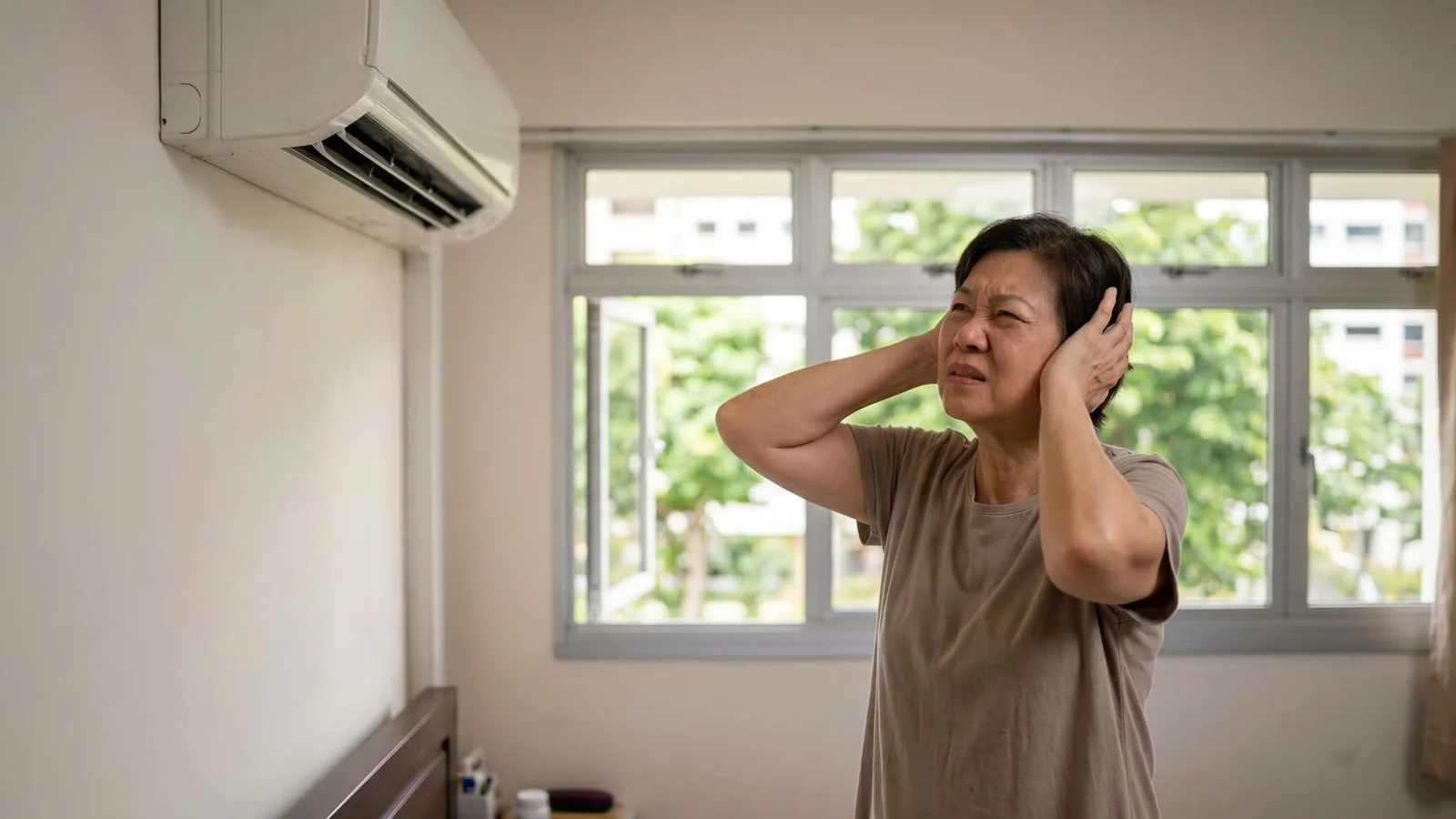
Our team at iCare Aircon fields questions about an aircon making noise from Singaporean homeowners almost every single day.
You know how a sudden, strange sound from your cooling unit instantly makes you worry about a massive SP Group bill. That panic is completely normal because catching the problem early separates a cheap fix from a complete system failure.
This Aircon Repair guide will help you translate those mechanical noises into actionable steps. James Tan and Sandra Lim founded our company in 2016 to bring transparency to local cooling services.
Today, you are probably trying to figure out if that noise means you need immediate help or if it can wait. Let’s look at the specific sounds your unit is making, explain the practical context behind them, and outline the exact diagnostic steps our technicians use in the field.
Noise types
Our daily service calls across Singapore HDB estates usually involve five distinct sound categories. A rattling, buzzing, hissing, grinding, or clicking noise tells us exactly where to start our diagnosis.
These specific auditory clues act as an early warning system for your unit. We categorise these noises to quickly identify the root cause during a routine check. A hissing sound typically points to escaping refrigerant, while a harsh aircon rattling sound often involves loose physical components.
Here is a quick breakdown of the most common sounds you might hear:
- Rattling: Sounds like loose plastic or metal shaking rapidly.
- Buzzing: A steady, electrical hum that feels unnatural.
- Hissing: Resembles the sound of a pressurised tyre leaking air.
- Grinding: A heavy, metal-on-metal scraping noise.
- Clicking: A sharp, repetitive tapping from the indoor or outdoor unit.
Our technicians frequently discover that a rattling noise is just a detached front panel. Sometimes, inexperienced contractors leave screws improperly tightened after a basic chemical wash. We always secure these panels properly to eliminate the nuisance immediately.
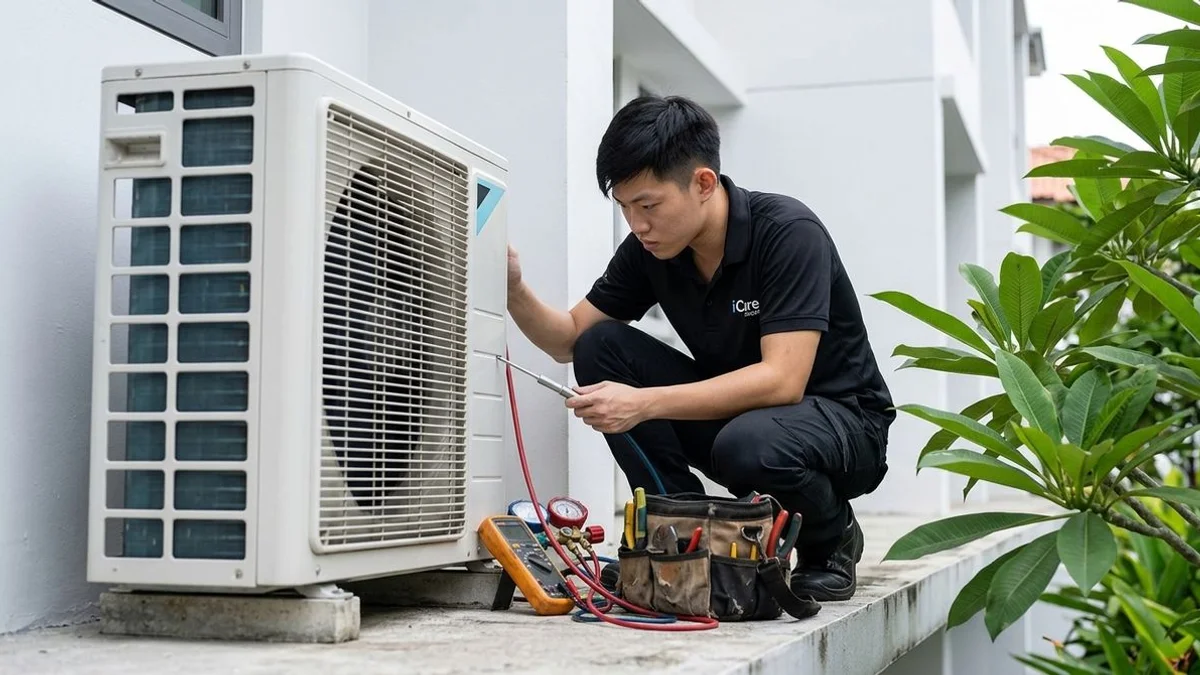
What an aircon making noise typically indicates (loose part, electrical, gas leak, motor, relay)
Our diagnostic process links every specific noise to a failing component, whether it is a loose part, an electrical fault, or a motor issue. High humidity and constant usage in local homes accelerate wear on these specific parts.
Here is a quick reference guide matching the sounds to their likely failures and required repairs:
| Noise Type | Most Likely Component Failure | Typical Repair Action |
|---|---|---|
| Rattling | Misaligned fan blades or loose casing | Realign cage and tighten mounting screws |
| Hissing | R32 refrigerant line leak | Seal copper flare joints and recharge gas |
| Buzzing | Degraded outdoor capacitor | Replace the $30-$50 electrical component |
| Clicking | Faulty PCB relay switch | Test and repair circuit board connections |
You will find that a hissing noise almost always indicates a refrigerant leak at the copper flare joints. We see this frequently with modern R32 refrigerant systems, where the gas escapes under high pressure. This pressure loss forces the compressor to work overtime.
An electrical buzzing sound usually points straight to a failing capacitor in the outdoor condenser. This small cylindrical part stores electricity to jump-start the fan motor. Our teams replace dozens of these degraded capacitors every month before they cause full motor burnouts.
A repetitive clicking noise often signals a failing relay switch on the printed circuit board (PCB). The board is trying to send a signal to start the cooling cycle, but the connection keeps dropping.
Urgency by noise type
Our priority is to help you distinguish between a minor annoyance and a critical mechanical failure. A soft rattling panel can wait a few days, but a loud hissing or grinding noise requires immediate professional intervention.
You risk severe financial damage by ignoring the high-urgency sounds. We classify grinding noises from the outdoor unit as a top-tier emergency. This metal-on-metal sound usually means the compressor motor has lost its internal lubrication.
To help you decide when to call a technician, we use this basic urgency scale:
- Low Urgency: Soft rattling from loose indoor plastic panels.
- Medium Urgency: Ticking or soft humming from a dry fan bearing.
- High Urgency: Loud hissing indicating an R32 refrigerant leak.
- Critical Emergency: Heavy grinding or electrical buzzing from the condenser.
A minor refrigerant leak causing a hissing sound is highly time-sensitive. R32 gas top-ups currently cost between $80 and $200 in Singapore depending on the system size. Our field data shows that catching this leak early prevents the compressor from overheating.
If you let a failing compressor grind itself to death, you are looking at a massive replacement bill. A brand-new compressor installation easily exceeds $600 to $800, which often makes buying an entirely new system the only logical choice. We strongly advise booking a diagnostic check the moment you hear that heavy grinding.
For a related deep-dive, see our guide on Aircon Blinking Light: Singapore Troubleshooting Guide.
When to power off immediately
Our absolute rule is to cut the power at the main isolator switch if you hear loud electrical buzzing, heavy grinding, or sharp popping noises. Leaving the system running under these conditions will almost certainly destroy the internal components.
You should never gamble with electrical faults in a damp environment. We have seen minor buzzing noises quickly escalate into serious fire hazards when a compromised PCB shorts out completely.
If you notice a strong, sweet chemical smell accompanying a hissing sound, turn the unit off right away. This combination means you have a severe R32 refrigerant blowout. Our technicians wear protective gear when handling these specific leaks because the escaping gas is mildly flammable and displaces oxygen in small rooms.
Safety steps for electrical noises
- Turn off the remote: Stop the cooling cycle using your handheld controller first.
- Flip the main switch: Locate the dedicated 20-amp isolator switch near the unit and turn it off.
- Check the breaker: Go to your main distribution board and ensure the specific breaker is flipped down.
- Clear the area: Move furniture away from the indoor unit to prepare for a service visit.
We always check the main electrical terminals first when responding to a buzzing noise complaint. A loose wire drawing too much current creates a distinct arc sound that precedes a total system failure.
Brand-specific quirks (Daikin / Mitsubishi)
Our repair logs show that different manufacturers have unique sound profiles that can easily confuse homeowners. A noise that signals a critical failure in one brand might actually be a normal operational quirk in another.
You will often hear a faint, periodic clicking noise when starting up a Daikin inverter unit. We know this sound is just the electronic expansion valve adjusting the refrigerant flow, which is perfectly normal. However, if your Daikin outdoor unit is vibrating violently against the wall bracket, you likely have a degraded rubber mounting pad that needs replacing.
Mitsubishi Starmex units have their own highly specific, well-known quirk that drives many owners crazy. A constant, annoying ticking noise from the indoor blower often sounds like a broken fan blade. Our experienced mechanics know this is usually just the blower wheel bearing losing its factory lubrication.
This specific Mitsubishi ticking issue can be resolved rapidly without replacing any expensive parts by following a precise procedure:
- Remove the plastic casing from the indoor unit carefully.
- Pop the blower wheel bearing out of its retaining holder.
- Apply high-quality lubricating grease directly to the dry bearing.
- Reassemble the unit to eliminate the rattling and extend the blower assembly’s life.
Ready to Book?
Our technicians are fully equipped to diagnose and silence your noisy aircon today. The fastest path to a quiet room is securing a fixed quote right now.
You can call +65 3138 2108, message us directly on WhatsApp, or schedule a visit using the booking form on our contact page. We handle everything from simple fan blade realignments to complex R32 gas leak repairs.
For more specific detail on the technical service itself, check out our comprehensive Aircon Repair resources. Don’t let an aircon making noise turn into a massive compressor failure.
Contact us now to protect your investment and restore your peace of mind.
Frequently Asked
Is hissing always a refrigerant leak? +
Usually — power off and call immediately to avoid compressor damage.
Why does my aircon click when starting up? +
Often a relay or capacitor issue; not always urgent but worth checking.
Are old aircon units always noisier? +
Some — but a loud unit usually has a fixable cause, not just age.
Ready to Book Aircon Repair?
Same-day or next-day across Singapore. Fixed quote in writing. 90-day workmanship warranty.
Related Guides
Aircon Blinking Light: Singapore Troubleshooting Guide
What blinking lights mean, how to read the pattern, safe reset steps, and when to bring in a technic...
Aircon Error Codes Guide: Daikin, Mitsubishi, Panasonic
Plain-English error code reference for the major Singapore aircon brands — what each common code mea...
Aircon Leaking Water in Singapore: Causes and Fixes
Water dripping from your indoor aircon? Causes (clogged drain, slanted unit, frozen coil) and how to...
Aircon Repair vs Replacement: When to Make the Call
The 50% rule, age threshold, repeat-fault indicator, energy bill comparison — how to decide between ...